
Midsummer to set up 50 MW BIPV module factory in southern Italy
Through this new project, the Swedish CIGS turnkey equipment supplier aims to expand its presence in southern European PV markets.

Standalone EV recharging station integrating renewables, storage and hydrogen
Scientists in Qatar have developed a new model for setting up standalone EV recharging stations based on the hybridization of multiple renewable energy sources and different types of storage. The system includes power generation devices from CPV/T, wind, and biomass and is designed to fast-charge 80 electrical vehicles daily.

Hanwha Q Cells unveils special panels for floating PV
The South Korean module manufacturer has developed two new products for large-scale floating PV plants. They have power outputs of 415 W and 420 W and efficiencies of 19.4% and 19.6%.

New solar window tech from Australian startup
Australia’s ClearVue wants to push ahead with the development of its transparent solar glass technology. Construction is now beginning on a commercial-scale trial project.
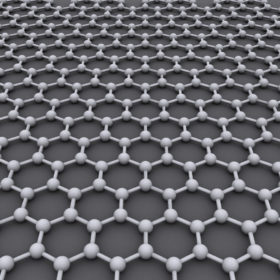
Investors bet $27.5 million on Nanotech Energy’s graphene battery breakthrough
Nanotech Energy plans to release a non-flammable, environmentally friendly lithium battery that can charge “18 times faster than anything that is currently available on the market.” And it aims to do it within the next year.

Long-term assessment of PV panel degradation under hot, humid tropical climates
A Dutch-Hungarian research team has measured, for 12 years, the degradation rates of PV modules installed in an off-grid system located in Ghana. It found that the panels had an average annual decline in power yield of 3.19%.
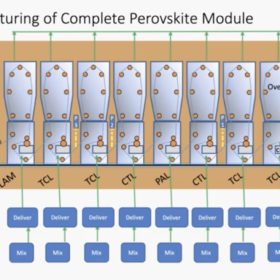
US start-up pursues roll-to-roll printing of perovskite on flexible glass
A Rochester-based firm aims to print perovskite and other PV layers on a flexible glass substrate using a roll-to-roll machine Kodak has used to produce photographic film.
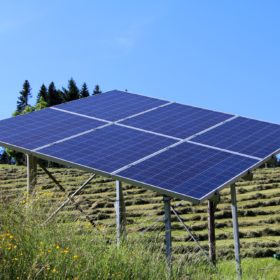
The best renewables combination for off-grid power supply
Scientists in India have proposed a model to design an off-grid, hybrid energy system based on a combination of solar, wind, biomass, biogas and fuel cell, linked to storage, for electrifying a cluster of three village hamlets in the Indian state of Karnataka. The model is implemented through the HOMER software and a genetic algorithm.
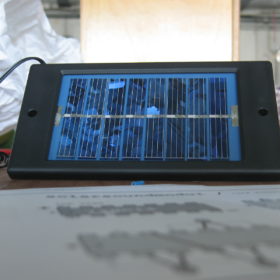
AI model for accurate prediction of organic PV efficiency
Over the last few months, Nastaran Meftahi has been spending her time in pandemic lockdown developing a machine-learning model to predict the future of next-generation organic solar cells.
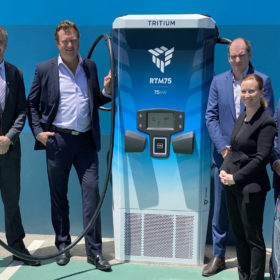
Tritium launches scalable EV charging solution
Australia’s Tritium has unveiled a new scalable solution, launched in tandem with the next-gen RTM75 DC Fast Charger, to knock down one of the few remaining obstacles to large-scale EV charger uptake.
