
Intense pulsed light processing for 23.0%-efficient silicon heterojunction solar cells
Scientists at Germany’s Fraunhofer Institute for Solar Energy Systems (ISE) have used intense pulsed light (IPL) processing for the development of a busbarless silicon heterojunction solar cell. ILP processing is roll-to-roll technique for rapid thermal processing of various thin films.
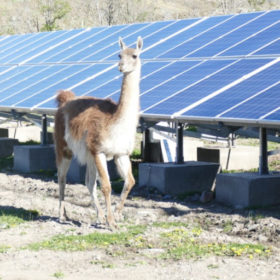
Hydro-PV microgrid in Patagonia
In a national park in Chile, a hydropower plant has been combined with a solar system and battery storage to replace diesel generation.

CIGS cells for micro-concentrator PV devices
Scientists have developed a new micro CIGS cell by using an area-selective electro-deposition process as a material-saving technique. It has a conversion efficiency rate of 5.2% and a high open-circuit voltage.

SNEC 2020 CEO Series – Interview with Liu Zhifeng, Vice GM of Jolywood
Jolywood is one of the few PV manufacturers, who has placed its bet on TOPCon technology. Instead of focusing on the simplicity of the production process, Jolywood believes the conversion rate is more critical. With years of efforts, the company has established its leading position among TOPCon players. During the SNEC 2020 in Shanghai, pv magazine had the opportunity to interview Liu Zhifeng, Vice General Manager of Jolywood, and listened to his views on some hot topics, especially the cell tech route.

Large-area organic PV module with 9.5% efficiency
Researchers in Taiwan have developed an organic PV module with an active area of 216 sq cm. The panel is said to have open circuit voltage of 10.6 V and short circuit current of 1.82 mA. It also features the highest efficiency reported for a panel of its kind which has an active area of more than 100cm2

Floating PV to offset underperforming hydropower
Brazil now has 12 GW of underperforming hydropower capacity, according to U.S. researchers. Large-scale floating PV is an ideal solution to offset this shortfall, due to its high capacity factor, load correlation, and high potential output during periods of high demand.
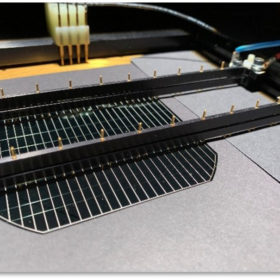
Modular systems to produce perovskite-silicon cells on six-inch wafers
Researchers in Germany are scaling up efforts to bring perovskite-silicon tandem solar cell technology into industrial scale production. The scientists say manufacturing cells of that kind is possible on widely-available six-inch silicon wafers and modular systems are being designed to do so at scale.
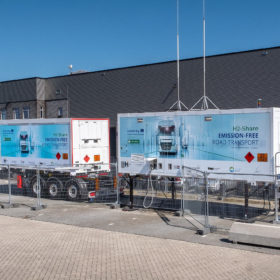
Hydrogen to go
German company Wystrach has developed a 350-bar hydrogen refueling station for heavy duty vehicles which can be installed anywhere.
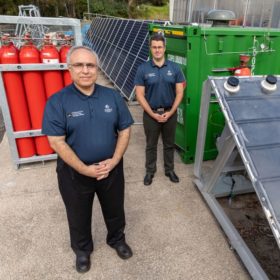
The people, the PV and the pipelines that could make hydrogen work
At Australia’s University of Newcastle hydrogen production starts with water extracted from the atmosphere and electrolysis powered by free energy from the sun; sucking CO2 from the air is the next step to filling Angus Taylor’s beloved gas infrastructure with green methane that can bring spuds to the boil and power the economy while helping to flatten the nation’s emissions curve.

‘Energy transition requires us to do things better’
The annual EU PVSEC conference got under way virtually this morning via an online platform since the planned event in Lisbon could not go ahead due to the Covid-19 pandemic. Opening presentations revealed an air of optimism in the PV industry, amid expectations of a rapidly rising share in the energy mix, growing conversion efficiencies, advancing technology pathways and innovative solutions to the problem of integrating high levels of PV into electricity grids.
