
Power-to-gas facility in Canada could pay back in just under three years
The facility’s size and operational pattern could be optimized using a mixed-integer linear programming-based model. By selling hydrogen, supplying grid ancillary services and selling by-product oxygen, power-to-gas economics could be dramatically improved.
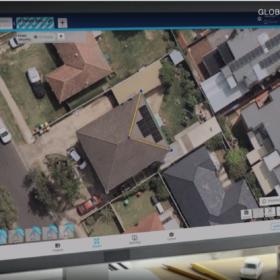
Digital prospecting and selling tools for rooftop PV
An Australian-developed aerial mapping technology is being deployed to speed PV uptake.

New method to calculate solar irradiation on rear side of bifacial panels
Researchers have announced a new technique that is a modified version of the isotropic diffuse model.

Thin-film amorphous silicon greenhouses begin to sprout
Researchers have matched the tinting of semi-transparent PV modules with the bandwidth of light that plants absorb for photosynthesis. A promising trial with basil and spinach has opened up economic opportunities for farmers.
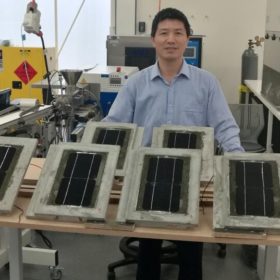
Solar tile with passive cooling
Researchers built the device by attaching 17%-efficient monocrystalline PV cells to a mortar roof tile that was doped with a phase-change material (PCM). The PCM solar tile provided 4.1% more power than the PV tile with no cooling agent in the winter, and 2.2% to 4.3% more during the summer.
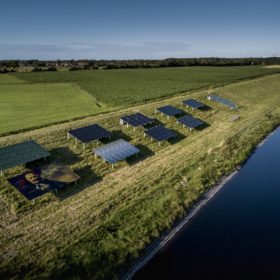
Challenging plans to deploy PV on dikes
Dutch researchers are trying to determine whether large-scale PV projects can be deployed on flood-control dikes across the Netherlands. A 5 MW solar project has already been built on a dike near Groningen, but the researchers believe there is potential to build up to 2.9 GW of PV on such embankments.
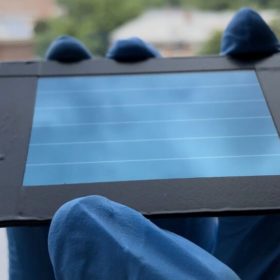
‘Spontaneous de-doping’ for 17.8%-efficient perovskite mini-module
U.S. scientists have found a new ‘de-doping’ process in perovskite solar cells that could cut production costs and produce better devices. They have used this to fabricate a mini-module with 17.8% efficiency.

Solar for parking machines
New Zealand researchers have proposed a way to assess the technical and economic feasibility of PV-powered parking machines. Solar might be an ideal solution, but the siting of the machines is critical and should be planned in advance, in line with available solar radiation and potential shading.
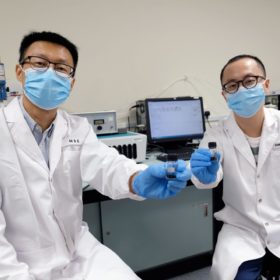
Low-cost catalysts for hydrogen production
Researchers in Singapore have taken a deep dive into spinel oxides – a class of materials known to act as a catalyst in the production of hydrogen through water electrolysis. Better understanding of how the materials work enabled the scientists to develop a machine learning model to predict their efficiency.
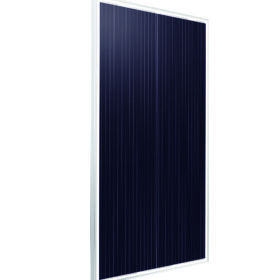
Recom unveils tri-cut solar panel series
The Jaguar series, with 20.81% efficiency and 445 W of maximum output, may be a solution for installations with space constraints. The panels are based on a special cell design, which Recom describes as an evolution of the half-cut cell concept.
