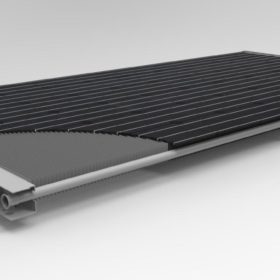
A photovoltaic thermal panel for heat-pump houses
Dutch company Triple Solar has launched a photovoltaic thermal solar panel for residential buildings which can be connected to a brine or water heat pump. The manufacturer says the heating system based on the panel is an ideal alternative to less efficient air and water heat pumps and more expensive geothermal systems. The grid-connected PV system can export excess power under net metering programs.

New manufacturing technique for 26%-efficient tandem perovskite solar cell
U.S. scientists have demonstrated a perovskite-silicon tandem cell they claim has low reflectance losses and strong potential for commercial production. The tandem architecture involves a manufacturing process featuring the solution-based blading of perovskites onto textured silicon wafers.

Covid-19 daily bulletin: Market contractions and hackathons
pv magazine rounds up the latest Covid-19-related stories likely to affect the world of solar and energy storage.
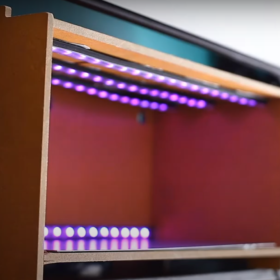
PV-powered hand sanitizer wins Covid-19 hackathon
An ESA-backed hackathon raised the idea of turning end-of-life PV modules into hand sanitizers. The team that won the hackathon is now working to rapidly roll out the solution at scale to contain the Covid-19 spread.

Wood-like solar facades
Taiwanese manufacturer Heliartec Solutions is offering BIPV panels for building facades that can be designed to mimic different kinds of textures in conventional building materials. The panels can also work as colored laminated safety glass and replace traditional cladding in the ventilated facades of buildings. They vary in length from 60 cm to 240 cm, with widths ranging from 30 cm to 120 cm. Depending on their size, the panels can offer power outputs of 90 W to 150 W per square meter.

Solar inverters vs. cyberattacks
A U.S. research group is now developing new inverters to protect solar installations from cyberattacks. The researchers also aim to create new cybersecurity standards. Professor Alan Mantooth, the group’s research coordinator, said that inverters can be shut down if they are hacked, or contribute to grid instability and result in the overcharging of batteries, while potentially creating problems that we still don’t know how to address.
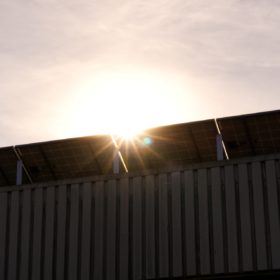
New technique to determine best cooling technique for solar modules
A new paper published by researchers at Malaysia’s Multimedia University provides a new method to assess the effectiveness of different cooling systems for photovoltaic modules. The proposed technique relies on measuring the output of the module with added cooling and comparing this to its power rating under standard test conditions.

A closer look at clouds to optimize energy forecasts
A group of scientists in the United States has developed a weather forecasting model designed to better predict the solar irradiation that a given area will receive. The model uses satellite data to estimate the light transmission properties of clouds, a metric often overlooked in standard weather forecasting, but nonetheless vital in modeling PV energy yield.
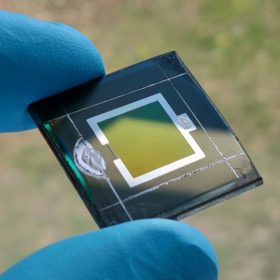
HZB scientists announce 24.16% efficiency for tandem CIGS solar cell
The Fraunhofer Institute for Solar Energy Systems’ (ISE) CalLab has confirmed the new efficiency rating. The researchers have combined semiconductors, perovskites and CIGS to produce a monolithic two-terminal tandem cell.

Ultrathin, flexible solar cell with 13% efficiency
Researchers at Monash University in Australia have managed to develop a solar cell so ultralight and flexible that it could revolutionize the future of wearable tech.
