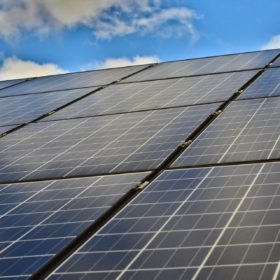
Chinese PV Industry Brief: 4.3 GW of new cell capacity and a 1 GW solar park
Cell manufacturer Aiko Solar is raising funds to increase its production capacity with 4.3 GW of new lines while Datang Corporation has inked a deal for a 1 GW desert project.

A 17.5%-efficient dark grey solar tile
U.K. business Roof Tiles Technology Ltd has developed a solar tile with a claimed efficiency of 17.5% and power output of 175 W per square meter. The company’s founder, Antonio Lanzoni, said a PV system featuring the product would cost 25-30% more than a standard solar rooftop.

Climate-friendly businesses can secure €500,000 EU investment to get through Covid crisis
A cash fund is offering financial aid to start-ups and SMEs to mitigate the effects of the public health crisis. The grants will convert into a stake in the recipients at a future date.

Innovation promises cheaper solar cell glass manufacturing
Scientists have developed a hybrid production method combining metal mesh and a metal-oxide layer over a glass substrate which they say brings down production cost by 80% compared to the tin-doped, indium oxide-based technology currently in use.

Software developer claims its platform can unlock a distributed generation world
U.K.-based Power Transition today launched a crowdfunding exercise to raise the £300,000 it says it needs to scale up its blockchain-based, peer-to-peer energy trading platform beyond a 47-home demonstration project.
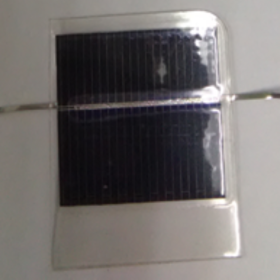
Pouch lamination technique for solar cell encapsulation
Scientists in India have used a pouch laminator to encapsulate a polycrystalline solar cell. The resulting device, the researchers claim, showed better UV photon absorption than solar cells treated with a polymer surface coating.
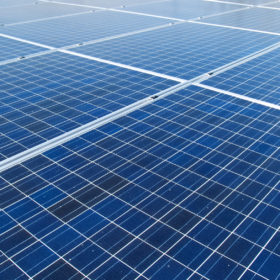
New method to measure cell voltages in operational PV modules
Scientists in Japan have proposed a new model to estimate cell voltages in solar modules by irradiating the cells with a weak modulated laser light. The method could be used to detect hot spots and other panel-degradation issues, such as potential induced degradation (PID) peeling, cracking, and poor contacts.

JA Solar opens up on new 525 W+ module
The Chinese manufacturer has not revealed the price of its new ‘ultra-high power’ products, nor whether the power output claims associated with them have been independently verified, but claimed the 78-piece module in the series could generate ‘very close to 600 W.’
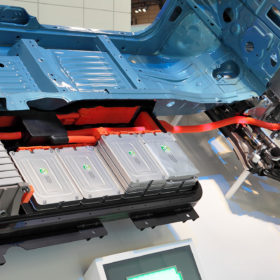
Used EV batteries for large scale solar energy storage
MIT scientists have suggested used electric vehicle batteries could offer a more viable business case than purpose-built systems for the storage of grid scale solar power in California. Such ‘second life’ EV batteries, may cost only 60% of their original purchase price to deploy and can be effectively aggregated for industrial scale storage even if they have declined to 80% of their original capacity.
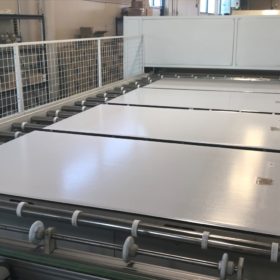
New solar module backsheet based on polyamide
Backsheet manufacturer Tomark-Worthen LLC has developed a new polyamide backsheet under the U.S. Department of Energy’s Sunshot initiative. The product is based on a novel polyamide-ionomer alloy created by U.S. chemicals producer Dow. The alloy, as well as the other materials in the backsheet, are stabilized with a UV/anti-oxidant package that slows down the damaging effects of ultraviolet radiation. The manufacturer claims that the backsheet is 25-30% more affordable than high-efficiency fluoropolymer products.
