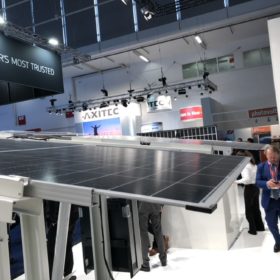
Trina claims another efficiency record, for n-type, i-TOPCon, bifacial cell
The 23.22% front-side efficiency of the 244.62 sq cm device – certified by Germany’s ISFH CalTeC – is another landmark for the Chinese manufacturer’s State Key Laboratory of Photovoltaic Science and Technology.

Scientists hit 21.6% perovskite cell efficiency using concentrator PV
An international research group achieved the result on a 9 sq mm, triple-cation based, n-i-p structured perovskite cell using low solar concentration levels. Device instability, however, remains a challenge.
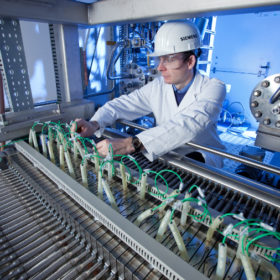
A new catalyst to split hydrogen from seawater
Scientists at the University of Houston in the United States have developed a new catalyst which they say can efficiently produce hydrogen from seawater. The group says that its discovery significantly advances the development of seawater electrolysis for large-scale hydrogen production.
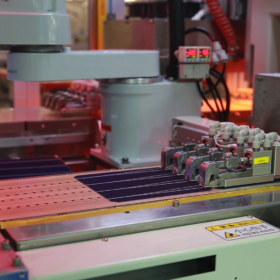
Hanergy hits 25.11% efficiency with HJT cell
The Chinese thin-film manufacturer has achieved 25.11% efficiency with a full size silicon heterojunction cell, beating its own record. The efficiency record has been confirmed by Germany’s Institute for Solar Energy Research Hamelin.

Digging into perovskite efficiency
A research group at the Helmholtz Zentrum Berlin has conducted an in depth analysis looking at the crystalline structure of methylammonium lead iodide, one of the most promising perovskite materials for solar cell production. The group made a series of discoveries which they hope will help to unlock some of the remaining issues in creating cells that are both stable and highly efficient.

Mounting interest in gravity-based storage solutions
Austrian researchers have proposed gravitational energy storage for locations with low demand. The scientists claim the system they are suggesting can be combined with other forms of storage as well as renewables, costs $50-100 per megawatt-hour of stored energy and $1-2 million per megawatt of installed capacity to develop.
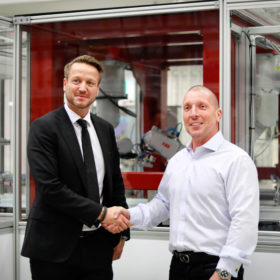
Exeger and ABB to build ‘light harvesting material’ fab in Sweden
Swedish company Exeger says the dye-sensitized ‘light-harvesting material’ it will produce at its facility will generate enough power to prevent the need to recharge portable electronic devices, lengthening battery lifespan perhaps indefinitely.

A whole new KIT of solar cell materials
Scientists at Germany’s Karlsruhe Institute of Technology have received €4.5 million from the Carl Zeiss Foundation to begin a project developing an entirely new solar cell concept they say will combine the printability of organic PV, long-term stability of crystalline solar cells and ferroelectricity of lead-halide perovskites.
Solar will power ahead to offer 20% more output for 25% lower module costs within 15 months
PV industry veteran Karl-Heinz Remmers recalls the trajectory of solar power this decade and predicts stronger than expected development for the ten years ahead.
Hot news on harvesting electrons in perovskites
An international research group claims to have developed a new bulk perovskite semiconductor material that can capture the excess energy of hot electrons. The material is said to rapidly absorb as heat energy which would otherwise be wasted. With the harvesting of hot electrons, the maximum theoretical efficiency for hybrid-perovskite solar cells could increase from 33% to 66%.
