
Does slew of solar mega tenders mean Gulf nations are belatedly accepting the inevitable?
With Kuwait, Qatar and even renewables laggard Saudi Arabia following in the wake of regional clean energy pioneer the UAE, a raft of huge solar tenders is entering the Middle Eastern project pipeline. Obstacles remain to overseas project developers but significant rewards are on offer.
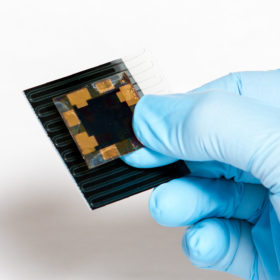
Teaming up on tandem performance
California-based Hanergy subsidiary Miasolé and European perovskite research institute Solliance have combined their thin film expertise to produce a 23% efficient flexible tandem device consisting of a semi-transparent perovskite cell on top of a flexible CIGS counterpart.
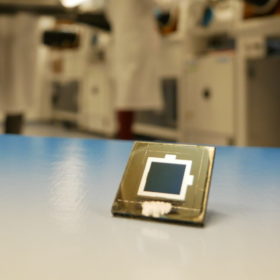
HZB hits 23.26% efficiency with CIGS-perovskite tandem cell
Scientists from the Helmholtz Zentrum Berlin research institute this morning presented a new world record efficiency for a tandem cell combining CIGS and perovskite technology at the EU PVSEC conference in Marseille. The development of an organic coating layer between the two semiconductors was key.
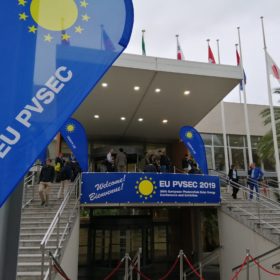
New methods for fault detection revealed at EU PVSEC
Quality control and problem detection and classification was brought into focus at the conference in Marseille. A packed house at a session focused on the latest fault detection techniques indicated the high level of interest in the field.
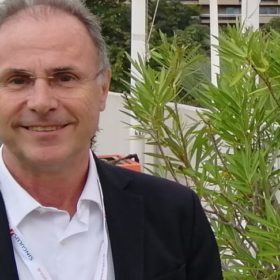
Solar pioneer Pierre Verlinden: The big problem is apathy
On the first day of this year’s EU PVSEC conference, veteran solar researcher Pierre J Verlinden won the Becquerel Prize for Outstanding Merits in Photovoltaics. The award recognized more than 40 years as a leading PV researcher in academia and at leading companies including Sunpower and Trina Solar. Its recipient spoke to pv magazine about what is needed from solar to stave off catastrophic climate change.
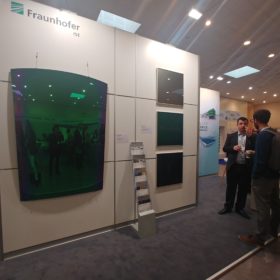
Opportunities for integration: EU PVSEC 2019
Germany’s Fraunhofer ISE is presenting a wide range of solutions for integrated PV – alongside farming, vehicles, the built environment and more, at the 2019 EU PVSEC show happening this week in Marseille.
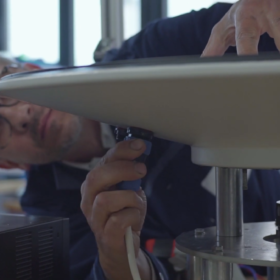
French start-up launches solar engine
The invention converts the energy produced by PV cells directly into mechanical motion without the need for batteries or power electronics. Its developers claim the robustness of the solar motor can drive water pumps and ventilation turbines for more than 20 years without the need for maintenance.
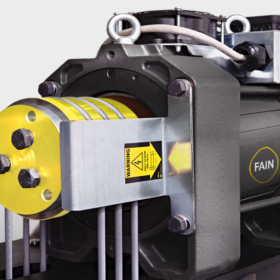
Solar powered elevator unveiled in Spain
The ‘green’ version of the ION Green Solar lift – designed, developed and manufactured in Spain by Fain Ascensores – can cut carbon emissions 86%. That figure rises to 100% with the PV-powered ‘solar’ model.

Softbank injects another $10m into Swedish dye-sensitized solar specialist Exeger
The Japanese multinational lender is making its second investment in the Swedish start-up. The funds will help the company ship its first products next year.
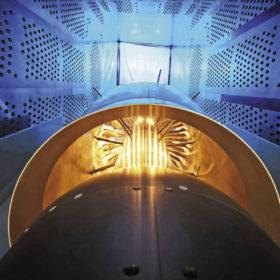
The weekend read: PV in need of a new chapter for wind
In part two of this feature on wind resilience in the PV industry, the lack of structural codes comes into focus. Weather events, and wind above all, are the most common causes of failure for PV plants. In the United States, the first steps have been taken to catch up with other industries and a dedicated chapter for PV is set to be included in the next update of the American Society of Civil Engineers code. In Europe, no such plans are in place.
