Lead-free quantum dot solar cells with 10% efficiency
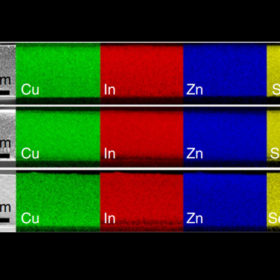
Scientists in the United States have created a quantum dot solar cell which has a photon-to-electron conversion efficiency of 85%. The device is also said to exhibit remarkable defect tolerance and toxic-element-free composition.

A pressure-assisted technique to increase perovskite solar cell efficiency
Researchers in the United States claim to have significantly increased the efficiency of a perovskite solar cell by applying a range of pressures to the device. According to them, pressure-assisted processes such as lamination, cold welding and rolling/roll-to-roll processing can be used to improve interfacial surface contacts in perovskite cells.
New method for life cycle assessment of PV technologies
Researchers in Australia have conducted a ‘cradle to grave’ life cycle assessment (LCA) of the four most widely used PV technologies. The academics say that cadmium telluride solar modules have the lowest life cycle impact, followed by amorphous, multi and monocrystalline silicon products.
A PV antenna for solar power beaming from space to Earth
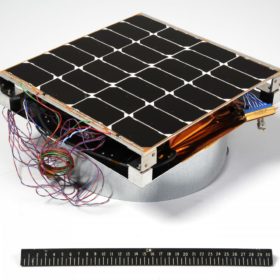
Researchers from the U.S. Naval Research Laboratory have launched first orbital experiment with space-based solar power. They have sent into space a 12-inch square tile photovoltaic module that is expected to test the viability of space-based solar power systems converting sunlight to microwaves outside the atmosphere.
Solar grade silicon production comes back to Spain
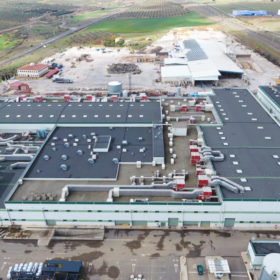
Rivas-Vaciamadrid-based company Aurinka is planning to start UMG silicon manufacturing in Puertollano, Castile-La Mancha, this year. The company says its patented low-carbon production process offers low enough manufacturing costs to compete with Asian rivals.
BIPV solar modules with varying transparency
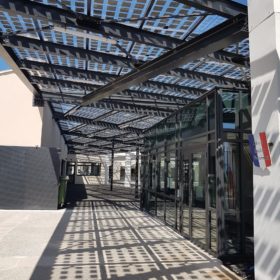
German panel maker Sonnenstromfabrik has developed a glass-glass monocrystalline PV module in three versions offering different levels of transparency. The company says the transparency feature makes the panels suitable for verandas, pergolas, awnings, carports, swimming pools, halls and facades. Their power output varies from 160 W to 280 W, while their efficiency ranges from 9.5% to 16.7%.
A new concept for heat-recovery solar cells
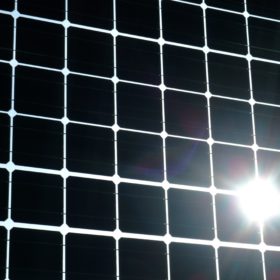
Researchers in Japan have demonstrated a new concept for a ‘heat-recovery’ solar cell, which they claim has the potential to exceed the theoretical limit for cell efficiency. They say, however, that a suitable material for the energy filtering layers is yet to be identified. The cell is equipped with a 100-micron thick silicon absorber, two electrodes and carrier-energy filtering layers placed between the absorber and electrodes.
Paving the way for lead-free perovskites
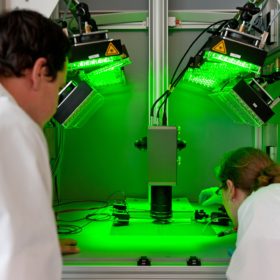
Scientists in Germany and China have developed an additive which greatly improved the performance of a tin-based perovskite solar cell. Cells fabricated with the additive reached 9.1% efficiency, and the researchers say their work opens up many new possibilities to improve the performance of lead-free perovskites.
A new device to detect PV panel failure
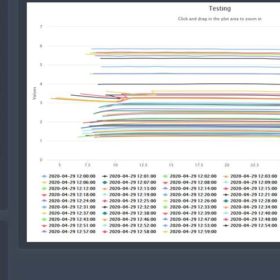
A Spanish start-up has developed a system which offers automated fault detection in solar panels at any scale.
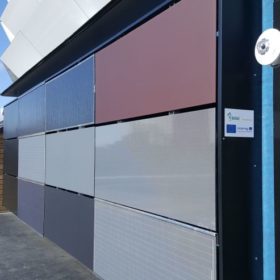
Colored PV module performance is underestimated
In a recent conversation with pv magazine Roland Valckenborg, business developer and project manager at the Netherlands Organisation for Applied Scientific Research (TNO), has described the results of a multi-year testing program for colored BIPV modules. Just a few years ago, it it was thought that power yield could be up to 50% lower than conventional panels, but tests have shown a difference of just 10%. Valckenborg says that losses can vary depending on the color of a panel.
