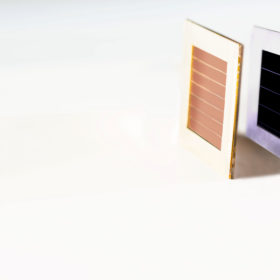
Imec claims 24.6% efficiency for tandem CIGS cell based on perovskite
The Belgian research institute developed its cell in partnership with EnergyVille, Solliance and German research center, ZSW.
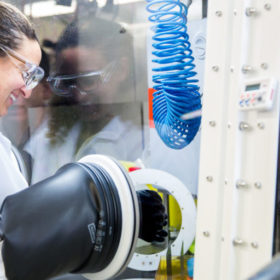
Oxford PV, Oxford University target 37% efficient perovskite solar cells
The solar company has launched a five-year research project with the British scientists, which has been funded with £2.5 million from the U.K. Government. The goal is to develop a thin film multi-junction perovskite solar cell with a 37% efficiency and long-term stability.
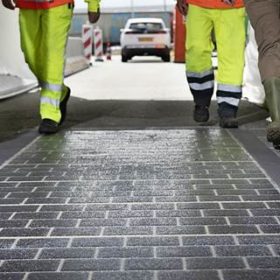
Netherlands to test viability of solar roads
Although solar energy roads are still considered economically unviable, the Dutch water management agency, Rijkswaterstaat announced it will investigate their potential as an alternative to the lack of surfaces for PV deployment in the Netherlands.
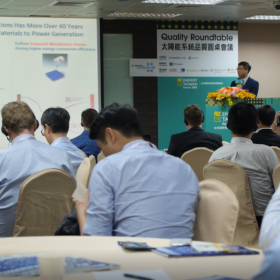
pv magazine Quality Roundtable, Taiwan: Carrier-induced solar cell degradation: Solved (sort of)
Solar cell manufacturers are always on an R&D race to improve efficiency. But even with their efforts, today you can still expect up to about a 3.5% loss from carrier- or light-induced degradation, industry insiders claimed last Thursday at pv magazine’s Quality Roundtable, held at Energy Taiwan 2018 in Taipei.

Better bifacial adoption, catalyzing innovation focus of Future PV Roundtable at REI
pv magazine’s Future PV Roundtable, held at the 2018 Renewable Energy India (REI) Expo in Greater Noida, discussed how India can better adopt bifacial solar cell and module technology – the future of power generation. Prominent industry speakers also put forth their views on how standards can catalyze solar innovation for India-specific challenges, and on PV materials and components for enhanced module efficiency and recycling.
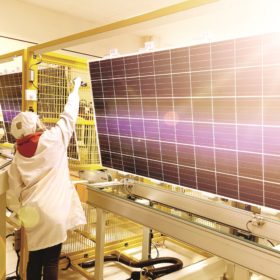
Canadian Solar unveils new 400+ Watt bifacial poly PERC black silicon module
The Chinese-Canadian module manufacturer says its P4-based BiHiKu panel, for large commercial and utility-scale solar projects, is able to provide up to 30 per cent additional output from the rear side.

Australian researchers use nanocrystals to harvest solar energy for clean fuels
Researchers at Western Australia’s Curtin University have developed a low-cost and environmentally friendly method to capture solar power and produce clean fuels such as hydrogen.

Manufacturers and research institutes form alliance in Europe
The European Solar Manufacturing Council has been launched at EU PVSEC in Brussels. Participating research institutes, mechanical engineers, material and PV manufacturers stress the importance of having big solar manufacturers in Europe.
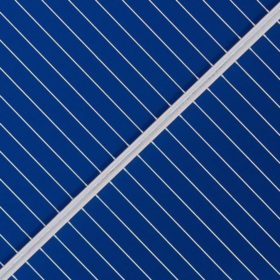
Heraeus to partner with Ulbrich Solar Technologies for SCR production
The new Selectively Coated Ribbons (SCR) technology could improve yields by 2.2 Watts on module level, says the manufacturer. The new ribbons can also be used with existing equipment, omitting the need for manufacturers to invest in new production outlay, at a time when profit margins in module manufacturing are squeezed.
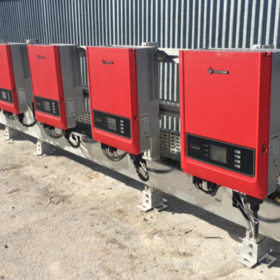
Interview: GoodWe talks IPOs, policy changes and tripling production capacity
In an interview with pv magazine, vice president of GoodWe, Ron Shen, talks about the company’s plans for Germany, Spain, Africa and India, in addition to its goal to triple production capacity to 15 GW in China. He also discusses the effect of China’s 31/5 policy change, and plans for an initial public offering (IPO).
