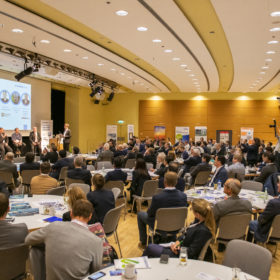
Video: Quality Roundtable tackles glass-glass issue and underground cabling
At The smarter E Europe trade show, held in Munich in May, pv magazine was invited for another iteration of its Quality Roundtable events. Experts from manufacturing, project planning, finance and testing took the stage to inform the crowd on quality issues with modules, cables and inverters.
JinkoSolar records 469.3 W monocrystalline module
JinkoSolar today announced that it has set a new efficiency record for a monocrystalline PERC PV cell at 24.38%, and produced a module that achieved 469.3 W power in testing conducted by TÜV Rheinland. The Chinese module manufacturer also equalled a record claimed just last week by Trina Solar, of 24.58% conversion efficiency for an n-type monocrystalline cell.
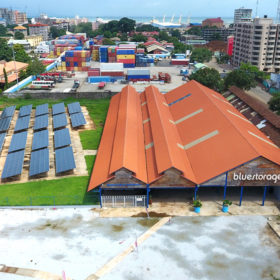
Blue Solutions on why it’s betting on solid-state batteries
While market experts suggest solid-state battery technology will not play a significant role in the storage industry until 2025, one company may be leading the race. Blue Solutions, electrical energy storage award winner at The smarter E Europe in Munich, Germany, says it has developed the only commercialized solid-state lithium battery. pv magazine caught up with the company around the European trade show to discuss its award-winning technology and unique position in the market.
Russian scientists aim to enhance cell efficiency with gadolinium oxide nanoparticles
A Russian research team believes that the addition of rare-earth ions into the structure of photonic nanoparticles could help to increase the efficiency of industrial solar cells to 25–30%. However, they also said that further research is necessary.

Trans-Pacific partnership aims to accelerate green hydrogen uptake
Australia’s national science agency CSIRO and Canada’s University of British Columbia have announced a memorandum of understanding aimed at accelerating clean hydrogen technologies.
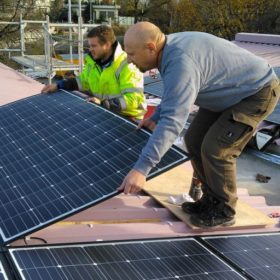
From Suntech to Sunman’s glass free modules
At the beginning of the decade, Zhengrong Shi, at that time founder and CEO of Suntech, was one of the most influential people in solar. After the Chinese module manufacturer ran into troubles in 2013, he had to go and, thus, slipped out of the spotlight. Now he is back as founder of Sunman, a company specializing in lightweight crystalline modules using polymer composite materials instead of glass. pv magazine caught up with him at Intersolar Europe 2019.
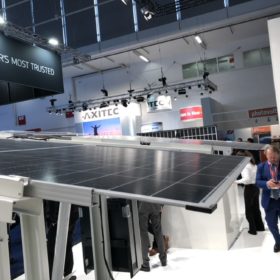
New cell efficiency records for Trina and Canadian Solar
Chinese PV manufacturer Trina Solar today announced it has achieved a new efficiency record of 24.58% for a cell based on n-type monocrystalline TOPCon technology. The record has been confirmed by the ISFH CalTeC laboratory in Germany. Meanwhile, fellow giant Canadian Solar also hit a new milestone with its cast mono technology, reaching 22.28% conversion efficiency on a 157mm² wafer.
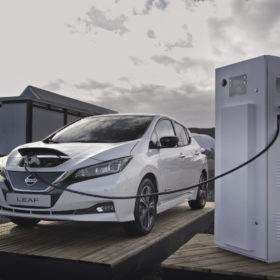
Global electric car fleet may reach 250 million by 2030
The International Energy Agency says more than 2 million electric vehicles hit the road last year, to take the total to more than 5 million. The agency has stressed the importance of public policy, charging infrastructure and a fall in costs for continued EV uptake, and says up to 43 million EVs could be sold in 2030.
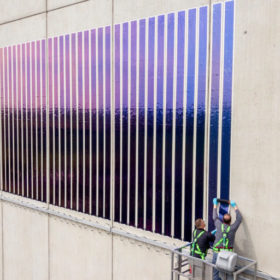
Heliatek and Lechwerke test PV facade on grain silo
The two companies have glued 230 square meters of solar film to the rough concrete surface of a grain silo in Donauwörth, Germany. The film is expected to generate approximately 6,700 kWh kilowatt-hours of solar power per year. Lechwerke and Heliatek want to open up new potential for the use of PV on other surfaces with the pilot project.
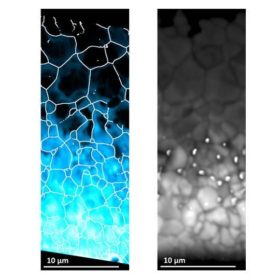
How selenium alloying gives CdTe thin film a boost
A new study conducted by an international team of scientists from leading institutions in the U.K. and the United States provides an explanation as to how the addition of selenide can greatly improve the efficiency of cadmium telluride solar cells. Explaining the performance boost will provide researchers with a route to explore further efficiency improvements, pushing the material’s cost even lower.
