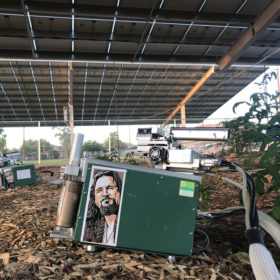
Food crops do better in the shade of solar panels
Another study has highlighted the advantages of combining solar with agriculture. According to the paper, growing chiltepin pepper, jalapeno and cherry tomato in dryland areas of the U.S. under the shade of PV modules is not only possible, but can lead to a better harvest.
Coating could lead to commercial lithium-metal batteries
A new coating developed by scientists at Stanford promises to bring lithium metal batteries ‘closer to reality’, by significantly extending their operational lifetime and limiting the occurrence of dendrites at the anode, which can cause short circuiting and fires.
Canadian researchers have done the math on optimizing PV output
Mathematicians at Canada’s University of Waterloo who turned their attention to solar power have developed an algorithm they say offers better control over PV plant output. The researchers estimate the algorithm could improve the output of a 100 MW power plant by almost a million kilowatt-hours per year.
Tuesday webinar: New test for microcracks will ‘push the industry to exceed benchmarks’
A new test design from the University of Central Florida has challenged modules with different cell technologies. The results show advantages for the heterojunction modules tested. Here we discuss the new method with its designer.

Mini series: Creating a common language for solar in the energy mix
As solar comes to represent a larger proportion of the global energy mix, direct comparisons with conventional energy sources, and even with other renewables, are becoming more and more important. This is reflected in a bid by the United Nations Economic Commission for Europe’s (UNECE) Expert Group to standardize reporting on solar energy potential. Long Seng To, Royal Academy of Engineering research fellow at Loughborough University, and part of the UNECE solar energy subgroup, discusses the draft standards.
Mini series: The evolution of testing
Tara Doyle started her career in the solar energy industry more than 15 years ago, and today serves as the chief commercial officer at PVEL, which claims to be one of the first testing laboratories to focus on bankability for the downstream PV buyer community. The lab serves developers, financiers, O&M companies, asset owners, and insurers.
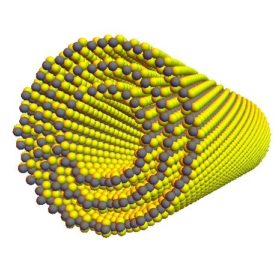
Scientists discover photovoltaic nanotubes
An international team of researchers led by the University of Tokyo has discovered a new material which, when rolled into a nanotube, generates an electric current if exposed to light. If magnified and scaled up, say the scientists, the technology could be used in future high-efficiency solar devices.
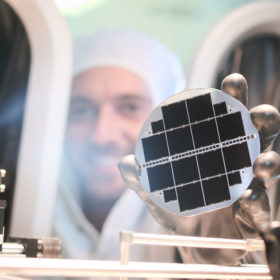
Fraunhofer ISE achieves 34.1% efficiency with triple junction cell
Scientists at Germany’s Fraunhofer Institute for Solar Energy Systems have broken two of their own records for cell efficiency, working with silicon and III-V material tandem cells. The institute hit 34.1% on a triple junction cell using wafer bonding technology and 24.3% by directly depositing III-V layers onto a silicon solar cell.
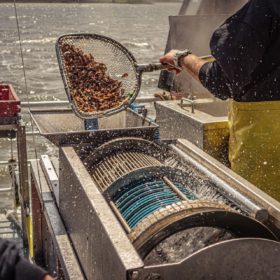
Shrimp and PV goes together like peas and carrots
With the benefits solar panels can bring to cropland being considered in Europe, PV and aquaculture are working in tandem in Vietnam. Shrimp and fish farming requires land and lots of water but solar panels are helping mitigate those demands.
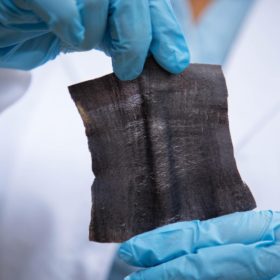
A graphene-based supercapacitor that’s also…. a t-shirt?
Scientists at the Royal Melbourne Institute of Technology have developed a method for producing a ‘smart fabric’ with a supercapacitor energy storage device embedded in it. Its developers say it can be readily integrated with a solar cell or used to power wearable technology.
