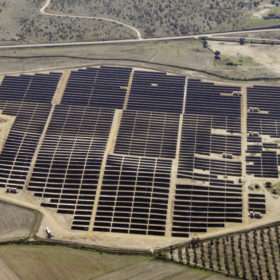
1: What a difference a year (in PV) makes
Dire warnings about the state of our planet characterized 2018, with a plethora of reports released calling for climate action. The solar PV, and storage, industries have a leading role to play in the required energy transition: this bold quest was taken on by many over the last year, with technological progress and expansion seen upstream and downstream, and in policy, globally. Like last year, China took all by surprise, this time, however, in the form of its abrupt 31/5 policy change, the effects of which are still being felt in almost every corner of every market. And of course, Tesla grabbed the headlines – also for rather more unsavory reasons than in 2017. In this first out of a total of four posts pv magazine reflects on Q1.
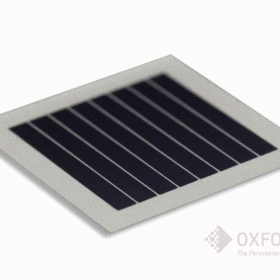
Tandem cells at 28%
UK headquartered Oxford PV has set a new world efficiency record for its perovskite/silicon tandem solar cells.
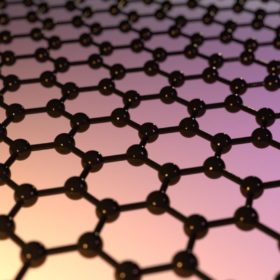
US researchers grappling with graphene
A team of scientists at University of California, Riverside investigating the ‘unusual’ electronic behavior of pristine graphene has found that, in certain configurations, the material can generate a current without the need for a p-n junction, leading to the possibility of extremely thin, lightweight solar devices.

Efficiency record isn’t the biggest change for Alta Devices’ GaAS solar technology
Alta Devices’ gallium arsenide solar research cells have been certified with a 29.1% efficiency, setting a new single junction solar cell efficiency record. The most significant change, however, isn’t actually the efficiency; it is that the weight fell 30%, and from the words of Alta Devices, its process has lowered material costs to “essentially nothing”.
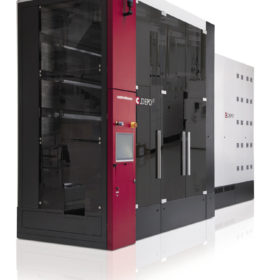
The weekend read: TOPCon boosts demand for EU equipment
Photovoltaic manufacturers in Asia are importing deposition reactors from the EU to test the latest word in silicon solar cell passivation. Two thin buffer layers sandwiched between silicon wafers and metal contacts are increasing the efficiency of conventional solar cells and setting new records. Equipment suppliers expect the technology to spread through the industry and boost their bottom line.
Solar module lifetime predictions are getting better
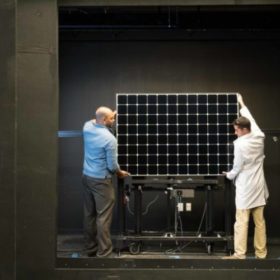
NREL has proposed a new methodology for determining solar module degradation rates, taking into account measurement challenges such as sensor drift, inverter nuances, soiling and others – keeping the focus on the solar modules themselves.
Australia’s QUT discovers process to lower the cost of renewable hydrogen
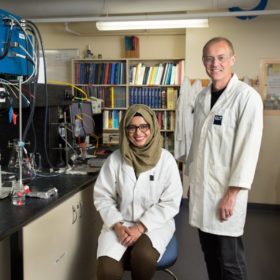
Hydrogen holds promise for harnessing renewables to produce clean fuel for transport, growing a green energy-export industry, and overcoming seasonal intermittency challenges in the grid. On the road to viable hydrogen production every cost-efficiency measure counts.
Molten silicon storage enough to power city, says MIT
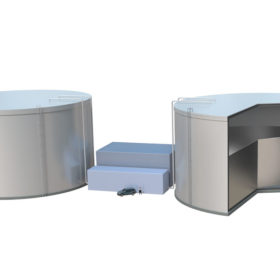
The system turns light of white-glowing molten silicon into electricity using specialized PV cells. The researchers claim that the concept could store electricity at around half the costs of pumped hydro. A single system comprising two ten meter tanks could power 100,000 households.
UNSW, Leadmicro to partner on ALD for PERC production
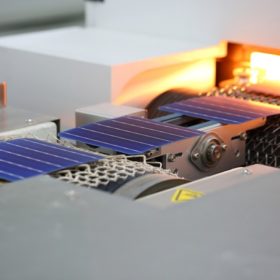
UNSW Sydney has partnered with Leadmicro to develop the next generation of PERC solar cells and fast-track their time to market. The Chinese PV production machinery manufacturer is donating $1 million Atomic Layer Deposition (ALD) reactor to UNSW to test and adapt a new process for PERC cell solar cell production.

Self-tracking solar panels, inspired by a lizard’s feet
Scientists at Harvard University have developed a type of material that can be programmed to move in response to various stimuli, including light. One possible application, says the group, could be in solar panels with integrated microstructures that track the sun without any energy input.
