
Singulus develops new diamond wire multi wafer texturing process
The German tooling firm announces the development of a new texturing process for multicrystalline wafers using diamond wire sawing on its LINEX inline system. Company believes process can boost multi wafer market in 2018.
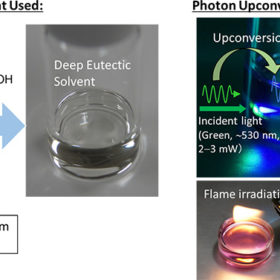
Japanese scientists develop new solvent-based photon upconversion platform
For the new kind of photon upconversion, the research team used deep eutectic solvents as an alternative to ionic fluids.

Germany: Digital solar and storage event pits hardware against services
At the event “Digital Solar & Storage” organized by Solar Power Europe and Ibesa and held today in Munich, Germany, the opportunities offered by the digitization of the solar industry were discussed. A dispute arose over the role hardware development will play.

Updated: Silfab, Morgan Solar JV targets 30% module cost reductions, plans large-scale production
In a unique partnership, the two Canadian companies are set to integrate low concentration optic technology into standard solar PV modules, in a move which they say will see cost savings of up to 30% and a silicon reduction of up to 80%. A “significant” factory ramp up is underway, with large-scale plans in the pipeline.
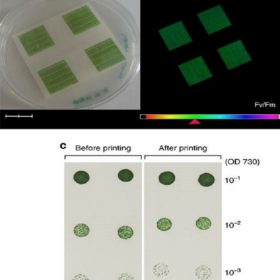
Researchers demonstrate feasibility of bio-photovoltaic cells to generate electricity
Using water as the source of electrons, microbial bio-photovoltaic (BPV) cells have the capacity to exploit the ability of cyanobacteria and microalgae to convert light energy into electrical current.

UK researchers seek to improve conductivity of fluorine doped tin dioxide in coatings for solar cells
Researchers at the University of Liverpool have identified the root of low conductivity in fluorine doped tin dioxide coating, a result that may have positive development for the glass coating of solar cells.
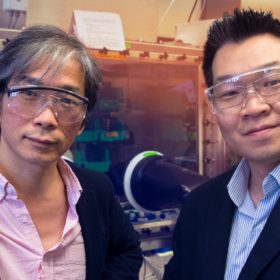
US scientists use hybrid organic–inorganic perovskites to increase solar cell efficiency
Research funded by the US Department of Energy and conducted by the University of Virginia has demonstrated how the rotation of organic molecules in hybrid organic–inorganic perovskites may expand the lifetime of photoexcited charge carriers.
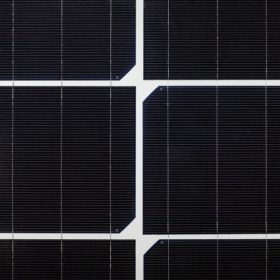
The weekend read: Every last watt
PERC power: As PERC settles into its position as a mainstream technology, leading module manufacturers are searching for ways to push ever more watts out of their module, and eliminate lingering degradation issues. So far this has included ramping up production capacities for half-cell modules and developing innovative new connection strategies. pv magazine looks into the latest technologies leading to gains in power output and quality at module level.

Solar-powered smart window technology takes a big leap forward
Scientists at the U.S. Department of Energy’s National Renewable Energy Laboratory (NREL) have presented a thermochromic solar window with a conversion efficiency of 11.3%. Meanwhile, performing experiments on dye-sensitized solar cells, Cambridge scientists have determined the molecular structure of working solar cell electrodes within a fully assembled device that works like a window.
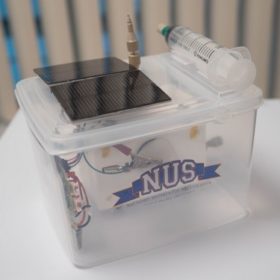
Singapore’s NUS researchers develop alternative ethylene production using solar energy
The prototype device, developed at the NUS Department of Chemistry, simulates photosynthesis to produce ethylene from carbon dioxide and water using natural sunlight.
