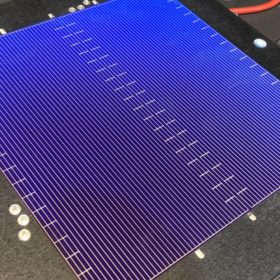
Chinese PV Industry Brief: Wafer prices rise as Aiko Solar halts shares offering
Manufacturers Longi and Zhonghuan Semiconductor have both raised the price of their 182mm wafers while holding the cost of their other products as rival Shuangliang Eco-energy signed deals for more wafer production equipment.
Solar parks could help to increase rainfall in arid regions
New modeling suggests that the reduction in albedo caused by large-scale solar plants could double rainfall in the Red Sea coastal plain of Saudi Arabia.

Indian green hydrogen will cost $5/kg
Ratings agency ICRA has estimated Indian green hydrogen will cost that much if produced at sites featuring clean energy generation capacity and electrolyzers. That is between 50 US cents and a dollar per kilogram cheaper than in locations where the two systems are not co-located, with the saving possible due to a reduction in open-access, intra-state grid charges.
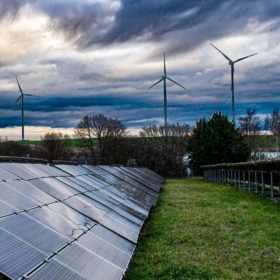
Subsidies, interest rates, carbon prices could disrupt renewables expansion
German and Swiss researchers have published a new study that questions the idea of a continual decrease in renewable energy costs, given the reality of rising interest rates and higher carbon prices. They outlined a scenario in which interest rates could rise by up to 5% and public incentives for renewables would be gradually phased out. This could result in a loss of 535GW of new renewables capacity, compared to a scenario in which interest rates remain at current levels.

Floating solar project and a battery manufacturing co-op among nine projects funded in Australian coal country
The government of the state of Victoria will fund a floating PV array and an initiative to locally manufacture solar batteries and install a portable renewable energy system for community services during emergencies, as part of its Latrobe Valley program.
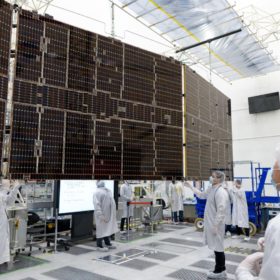
Psyche asteroid mission will be PV-powered, says NASA
NASA has said that it will explore a large, metal-rich asteroid with a remotely operated craft powered by two cross-shaped solar arrays.

Women crucial in transition to green energy
This year International Women’s Day focuses on #BreakingTheBias and celebrating women’s achievements and increasing visibility in schools, universities, communities, and workplaces. One of the sectors where the participation of women needs a boost is the energy sector, says Evrydiki Fekka, Head of Lithium Batteries Product Management at Sunlight Group Energy Storage Systems. In this article, she argues that women are key to unlocking a greener future for our energy needs.
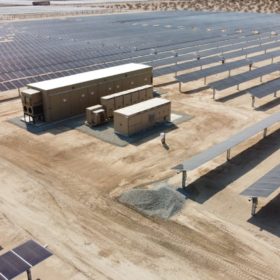
PV to account for about half of planned US utility-scale capacity additions
The US Energy Information Administration says that over the next two years, 60% of new capacity additions in the United States will be solar or battery energy storage.
IHS Markit: Battery prices won’t fall until 2024
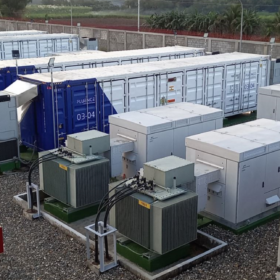
The London-based analyst has published a series of clean tech predictions for the year which also highlighted the rising proportion of sub-5MW solar projects in the global market, and cheaper clean energy financing costs even as panel prices continue to rise.
India’s solar cell imports rise as domestic module production expands
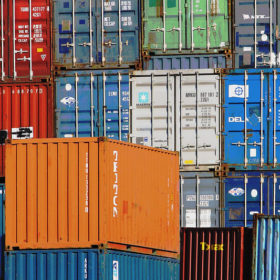
The nation imported solar cells worth more than $633 million from April to the end of last year, a figure higher than the value imported during the whole of the 2020-21 fiscal year.
