
Major advances for US, Australian solar window specialists
Australian solar window supplier ClearVue says its products can reduce carbon emissions in buildings by as much as 90%, while California-based BIPV window coating producer Ubiquitous Energy has raised $70 million to scale up its own tech.
India expands domestic content rules for open-access, net-metering PV projects
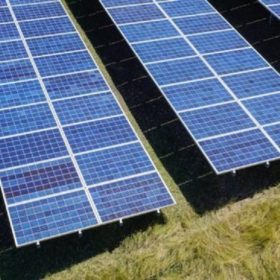
The Indian government has ruled that only solar products and companies on the Approved List of Models and Manufacturers will be eligible for open-access and net-metering projects, in addition to government-backed installations. This includes arrays set up to sell electricity to the government under Section 63 of the Electricity Act, 2003. The amendment will apply to projects that request open access or net metering from April 1, 2022.
Toshiba launches 20Ah rechargeable lithium-ion battery
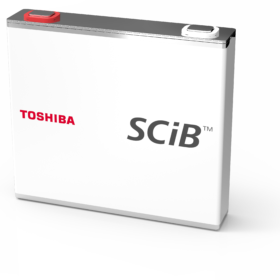
Toshiba has developed a battery that can be used with PV modules, with a design that charges and discharges at high currents. The new 20Ah-HP SCiB product has a rated capacity of 20Ah, a nominal voltage of 2.3V, and an input power of 1,900W. It measures 116 mm x 22 mm x 106 mm and weighs 545 grams.

The weekend read: V2G driving grid changes
The uptake of EVs in the years ahead will add up to staggering battery capacity, mostly sitting idle on driveways. The two-way flow of electricity from EV batteries, known as vehicle to grid, could not only enable power systems to rely on intermittent renewables, but could also be the trump card for network operators to respond to grid disturbances. However, there are still a few catches to be worked out, as Marija Maisch explains.
The Hydrogen Stream: Hydrogen refueling stations for automotive market
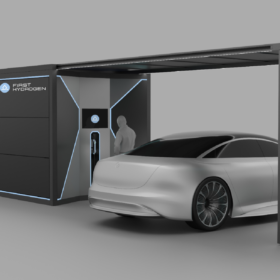
Canada’s First Hydrogen and German consulting firm FEV are developing a hydrogen fueling station for remote locations where there are no electrical power grids available. Furthermore, Japan and Indonesia have started to cooperate on hydrogen and carbon capture technologies and the UK gas grid is set to start blending hydrogen around the country from next year.
Chinese PV Industry Brief: JinkoSolar announces Jiangxi Jinko’s IPO pricing
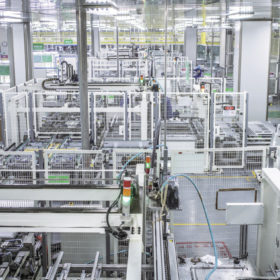
Jiangxi Jinko plans to issue 2 billion shares at RMB5.00 per share and expects to raise net proceeds of around RMB 10.0 million. Solar manufacturer Solargiga said it expects a 17% revenue growth for 2021.

Reliance Industries commits over US$75 billion for green energy projects in India
The Mukesh Ambani-led diversified business conglomerate has agreed to invest INR 5 lakh crore (US$67.6 billion) in building 100 GW of renewable energy capacity and green hydrogen eco-system in the state. It will also invest INR 60,000 crore (US$8.1 billion) in setting up manufacturing facilities for new and renewable energy equipment, including solar modules, electrolyzers, energy-storage batteries, and fuel cells.

Fluence, QuantumScape partner on solid-state lithium-metal energy storage
The companies will collaborate on what is believed to be a first-of-its-kind attempt to incorporate QuantumScape’s solid-state lithium-metal battery technology into stationary energy storage products.
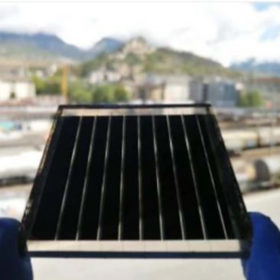
Perovskite solar module with 21.36% efficiency via new passivation tech
Lithuanian scientists built the panel with 23.9% efficient solar cells with operational stability of over 1000 h. The module has an active area of 26 cm2.
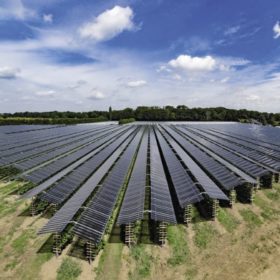
Israel launches tender for 100 MW of agrivoltaics
Selected projects will be awarded a fixed tariff of ILS 0.2091 ($0.06.708)/kWh over a 23-year period.
