
European Commission refuses to determine lawfulness of French 2006-10 solar FITs
With Paris having retroactively reduced solar feed-in tariff rates guaranteed for 20 years in 2006 and 2010, developer Solar Electric Holding has been unsuccessful in a legal bid to force the commission to decide on the compatibility of the incentive program with EU state aid rules.

Switzerland allocates $488.5 million for solar rebates in 2022
This year, more than 18,000 photovoltaic systems, totaling around 360 MW, have already been registered for the one-off payment. The rebate covers around 20% of the investment costs, depending on the system performance.

Indian transformer manufacturer to set up 4 GW solar fab
Shirdi Sai Electricals, an Indian transformer manufacturer and EPC contractor, has placed a $252.16 million incentive bid to set up a fully integrated, 4 GW polysilicon-to-module fab under the Indian government’s production-linked incentives scheme.
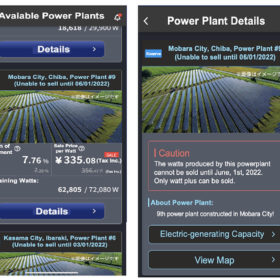
New app from Japan enables users to invest in utility scale PV starting from $2.2/W
The app is currently available only in Japan and its developer – Change The World – is now planning to bring it to the U.S. market. The app is purportedly enabling annual investment return of around 7% for projects under Japan’s feed-in tariff scheme.
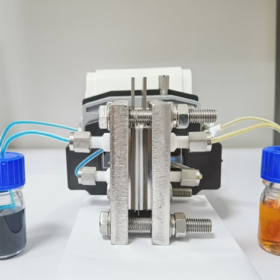
Redox flow battery with capacity retention of 99.98% per cycle
The battery was fabricated by Chinese scientists with a low-cost electrolyte made of a derivative of TEMPO, which is a well-known electroactive aminoxyl radical used with several applications in chemistry and biochemistry. According to the researchers, the battery shows high redox potential and is crossover-free.
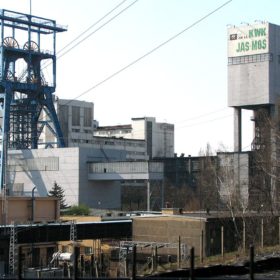
Poland’s largest PV plant comes online
Built by Polish energy producer ZE PAK, the 70 MW solar plant will sell solar power to Polish telecommunications group Polsat under a 15-year power purchase agreement.
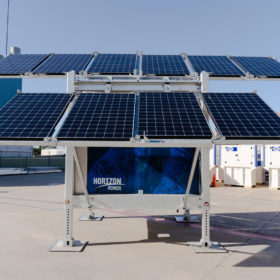
Distribution networks to shrink as safety, reliability of standalone solar improves
Western Australia leads the world in successfully implementing renewables-based generation for far-flung customers. Boundary Power has been widely recognized for its innovations and is ready to repeat its successes with standalone power systems across Australia and the Asia-Pacific.
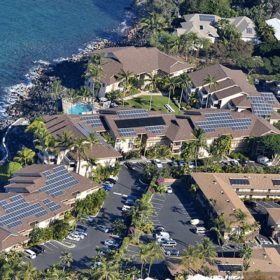
Lazard’s LCOE report raises concerns about future price stability
A new Lazard report has highlighted worries about price stability and product availability, as demand for battery products continues to increase.
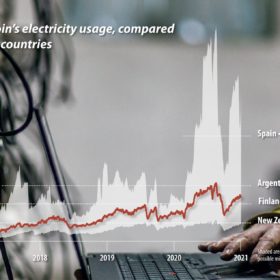
The weekend read: Crypto’s energy conundrum
In a financial world of stocks, bonds, foreign exchange, and credit cards, trillions of dollars are traded daily, with money flows handled by a bevy of databanks. In the world of cryptocurrency, billions of dollars worth of Bitcoin are traded through as many as 400,000 transactions per day, consuming the energy supply of a modernized country. The quirk is a “proof of work” feature that provides decentralized security. Is Bitcoin’s energy usage all for nothing, or is it a game-changer for renewable assets and generators? Tristan Rayner explores.
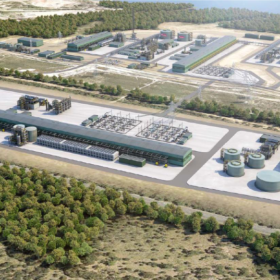
The Hydrogen Stream: Australia takes the spotlight with 1.7 GW project in Tasmania and new tech to produce hydrogen from rooftop PV
Elsewhere, Portugal’s EDP has unveiled plans to deploy 1.5 GW of green hydrogen capacity and, in Spain, several projects have been announced by Fotowatio Renewable Ventures (FRV), Iberdrola, Solaria Energía and Enagás.
