
Trina Solar enters storage business
The module manufacturer’s new storage unit, Trina Storage, aims to create innovative solutions for the combination of photovoltaics and storage, grid services and other applications.

Enphase to issue $1bn senior notes
The inverter business will use some of the proceeds to buy back notes due to mature in 2024 and 2025.
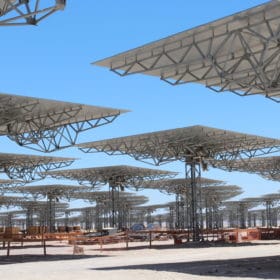
Hybrid PV-CSP has a lower LCOE than gas in Chile
Researchers from the Center for Solar Energy Technologies of Fraunhofer Chile have conducted a comparative analysis which shows that the lowest levelized cost of energy (LCOE ) in Chile can be achieved by a combination of large scale PV and concentrated solar power (CSP).
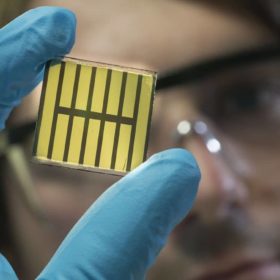
New process to assess quality of perovskite semiconductors
According to German scientists, the quality of the photoluminescence quantum yield of the perovskite layers can be reliably and precisely determined for the first time. It shows that the promising material has more potential for optimization than previously assumed.
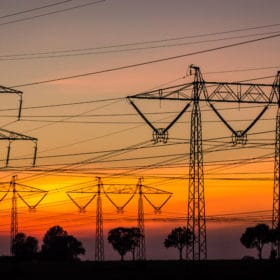
Poland granted preliminary grid-connection permits to 4.4 GW of PV last year
Data from the Instytut Energetyki Odnawialnej shows that the increasing number of grid-connection approvals may result in another record year for PV in the country in 2021.
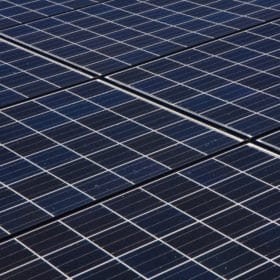
New Italian PV industry body struggles to unleash utility scale PV
As the ongoing changes in Italian politics inevitably create some uncertainties, PV operators continue to organize themselves, pulling together to put forward their agenda. pv magazine spoke with Andrea Cristini, spokesperson of new industry body Alleanza per il fotovoltaico in Italia, a group of 25 operators which in December joined forces to promote utility scale solar parks.

More EU cash for green hydrogen
The sustainable gas is among ten areas of research and innovation which would benefit from backing by the bloc, member states and industry, if a new European Commission proposal is adopted.
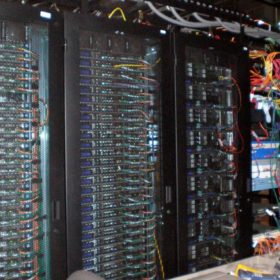
India’s Adani launches joint venture for renewables-powered data centers
AdaniConneX, the joint venture with US-based data center solutions provider EdgeConneX, will develop renewable energy-powered data centers with up to 1 GW of power demand in India over the next decade.
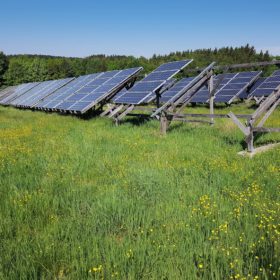
Agrivoltaics have an average LCOE of €0.093 per kWh in Germany
According to new guidelines by Germany’s Fraunhofer ISE, agrivoltaic projects are already competitive with other renewable energy sources today. The lack of a proper regulatory framework, however, is currently preventing the dual use of arable land for food production and power generation from becoming a mainstream solution.
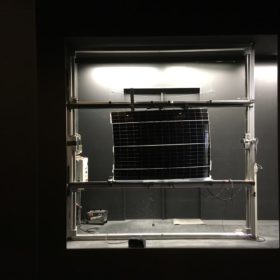
Vehicle-integrated PV reduces EV charging time in sunny regions by 40%
Dutch scientist Bonna Newmann spoke with pv magazine about the present and future of vehicle-integrated PV from a technological and economic perspective. Solar panels installed on cars could have a payback time of only three or four years and ensure 10,000 km of pure PV-generated road travel per year, she said. Furthermore, if you live in a sunny place, you can drive an electric car with solar panels for weeks during summertime, without the need for recharging, she pointed out.
