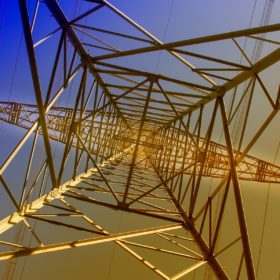
UK utility trials ‘world first’ renewables-friendly energy market
UK Power Networks’ ‘Power Potential’ project offers small scale generators the chance to be rewarded for voltage-balancing reactive-power services alongside traditional power stations.
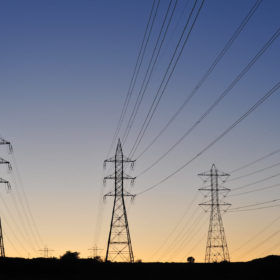
Fraunhofer to develop battery inverter for whole-area UPS and renewables integration
Industrial and academic partners are developing a battery inverter which can be grid connected under normal operation but can also use nearby renewables generators to form an island grid, for whole-area uninterrupted power supply.

Hungary’s second renewables auction attracts lowest bid of $0.0523/kWh
According to the Hungarian authorities, 253 of the procurement exercise’s 255 pre-selected projects are for photovoltaic plants. Around 390 GWh will be contracted in an auction that has been significantly oversubscribed.
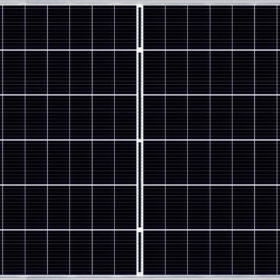
Canadian Solar launches 640-665 W panel series
The HiKu7 CS 7N-MS series is available with power output ranging from 640-665 W and efficiency ranging from 20.6-21.4%. The panel, which is the most powerful product the company brought to the market to date, is considered ideal for utility-scale and commercial and industrial PV projects.

China could annually deploy 65 GW of PV in 2021-25 period
Liu Yiyang, deputy general secretary of the China Photovoltaic Industry Association, believes that PV development will accelerate under the nation’s 2060 carbon-neutrality target.

Enel leads charge of non-solar-specialists climbing PV developer ranking
The Italian energy company has developed four big solar plants in the last 21 months to add 794 MW of generation capacity to its 3.67 GW solar portfolio and is emblematic of companies from the wider energy sector focusing on the renewable technology.
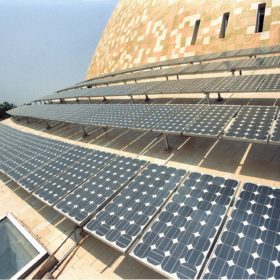
India added 883 MW of rooftop solar in nine months despite Covid-19
With 380 MW of generation capacity, the state of Gujarat accounted for 43% of new rooftop solar installations during the January-to-September period.
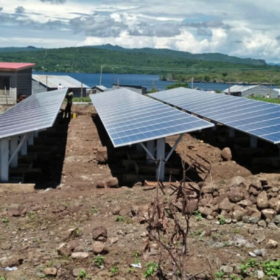
World Bank offers $4.6m credit for off-grid solar panels and cook stoves in Kenya
Part of the development lender’s $150 million Kenya Off-grid Solar Access Program, the money will enable distributors to stock up and establish sales networks as well as offering affordable repayment terms to customers across 14 off-grid counties in the East African nation.
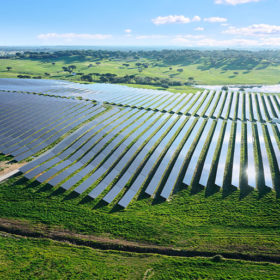
Australia’s largest solar farm goes ahead as Neoen wraps up financing
Construction will soon start on the massive 460 MW Western Downs Green Power Hub in Queensland, as Neoen has achieved financial close.
Can CIGS thin-film PV manufacturing return in the US?
A scientist familiar with First Solar’s earlier efforts in CIGS makes the case for the CdTe pioneer to return to the technology.
