Japan’s Kyocera, Cosmo Energy units enter solar, wind PPAs
Kyocera Corporation will begin to supply electricity generated from its solar assets to Cosmo Energy Solutions from next month. It has also entered into a separate power purchase agreement with Cosmo Eco Power for energy generated from a 48 MW wind farm.

Pushing perovskite solar cells to the ultimate thickness limit
Researchers in Singapore have developed fully vacuum-processed ultrathin perovskite solar cells with absorber layers as thin as 10 nm, achieving high transparency and stable efficiencies up to 12%. These cells balance optical transparency and electrical performance, offering scalable, design-flexible photovoltaics suitable for seamless integration into buildings.
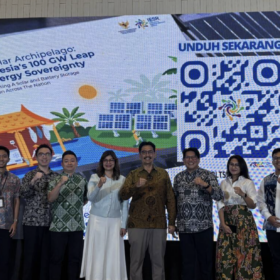
Indonesia’s path to 100 GW of solar
A study from the Institute for Essential Services Reform and Indonesia’s Coordinating Ministry for Economic Affairs explores how Indonesia can turn its target of deploying 100 GW of solar from mandate to mobilization.

Tongwei moves into hybrid heterojunction back contact solar cell technology
Tongwei is partnering with GS-Solar and Golden Solar to develop a large-scale manufacturing facility for hybrid heterojunction back-contact (HBC) solar cells that combine heterojunction passivation, tunneling oxide and polysilicon structures used in TOPCon designs, and the grid-free front-side architecture typical of back-contact technologies.
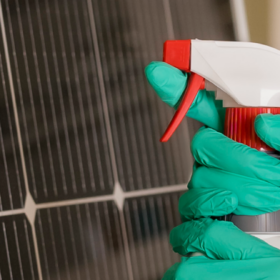
Beware of cleaning photovoltaic panels with dishwashing detergent
Researchers in Finland found that dishwashing liquid reduces solar module transmittance and performance, leaving residues even after rinsing. They recommend avoiding its use for cleaning solar panels.
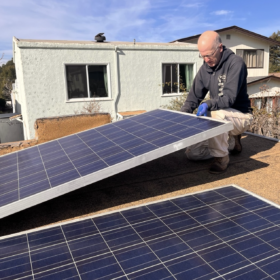
DIY plug-in solar shows $0.65/W potential in US market
Achieving a system cost of $0.65/W through the secondary market and do-it-yourself assembly demonstrates a viable pathway for US plug-in solar to provide immediate utility bill relief to renters and apartment dwellers.
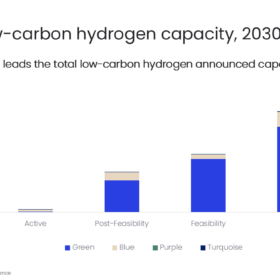
The Hydrogen Stream: Capacity outlook grows, deals shift
GlobalData says hydrogen capacity could reach 82.3 million metric tons per annum (mtpa) by 2030, while Topsoe has ended supply agreements with First Ammonia.
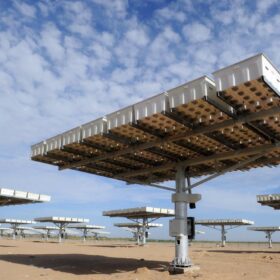
China PV Industry Brief: China adds 32.48 GW solar as polysilicon prices fall
China’s National Energy Administration (NEA) says newly installed solar capacity reached 32.48 GW in the first two months of 2026, while the China Nonferrous Metals Industry Association (CNMIA) says polysilicon prices fell by as much as 7.95% in the latest week.
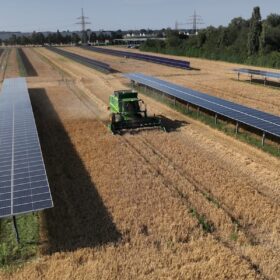
Agrivoltaics with trackers, vertical systems offer economic upside
An industry analysis argues that agrivoltaic systems using trackers or vertical designs can outperform conventional solar on both revenues and land use, challenging conclusions from a recent German study.
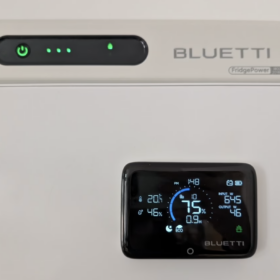
Bluetti targets home backup with fridge-focused battery system
Bluetti says its FridgePower system offers a plug-and-play battery solution designed to keep refrigerators and key household devices running during outages, without permanent installation.
