
Zimbabwe set for real solar growth
The government has decided to implement a proper independent power producer development plan for large scale PV, with the help of the World Bank.

Watch how to improve perovskite solar cells in 2D!
Saudi researchers claim to have improved the thermal stability and moisture resistance of such devices by replacing 3D hybrid perovskite with two-dimensional compounds. They used organic compound ethanolamine, which is said to provide better results in slowing down the hot-carrier cooling process.
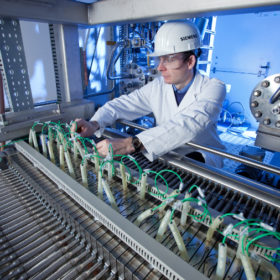
Integrated energy system could see 110 GW of electrolyzers in Germany and Netherlands
A report from Dutch grid operator TenneT and gas business Gasunie suggests the companies should jointly develop infrastructure after 2030. With hydrogen and synthetic methane in demand, electricity and gas will become increasingly inter-linked. Only seamless integration of the two networks would enable the EU to achieve its net-zero-carbon 2050 plan.

Israel launches 300 MW solar-plus-storage tender
The government wants a 300 MW solar plant linked to large scale storage in the Negev desert. Construction is planned for late 2021 and completion in 2023.
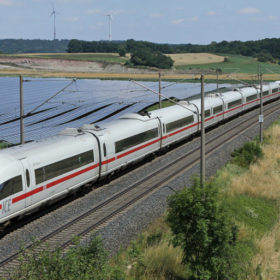
Railway-connected large scale PV project announced in Germany
A 42 MW solar park will be built in eastern Germany to generate power for the 16.7 Hz network of German rail operator, Deutsche Bahn. Construction is expected to start once final approvals are received from local authorities.
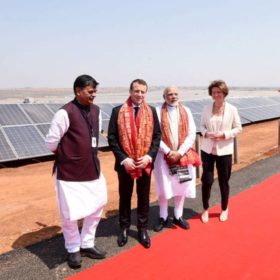
Engie sells controlling stake in 813 MW Indian solar portfolio
This transaction is part of Engie’s develop, build, share and operate strategy which involves selling part of its stake in renewables assets while carrying out operations and maintenance.
New process could yield 26.6% efficient IBC cells
Researchers in Germany are trialing a host of new processes and materials to develop interdigitated back contact solar cells. A deposition technology named ‘hot-wire’ chemical vapor deposition, is said to provide excellent passivation without the need for treatments such as recrystallization or hydrogenation.
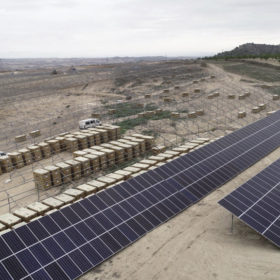
Galp to buy ACS solar assets for €2.2 billion – enough to rebuild Real Madrid
Portuguese gas company Galp Energía says it will become “the largest solar energy company in the Iberian peninsula”. The agreement includes operating PV plants with an installed generation capacity of 900 MW plus a further 2.9 GW under development.
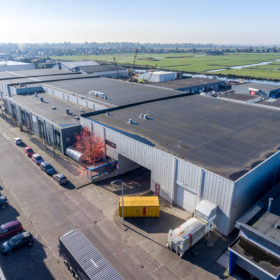
Deal reached to keep Energyra module production in the Netherlands
The Dutch PV manufacturer plans to start production this year after a last-minute rescue package arrived as the company’s equipment was being auctioned off.

Navajo Nation land could host 2.2 GW pumped hydro storage station
The Federal Energy Regulatory Commission has accepted Daybreak Energy’s application to develop a 2,230 MW pumped-hydro facility on the banks of Lake Powell in Utah.
