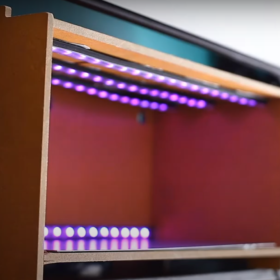
PV-powered hand sanitizer wins Covid-19 hackathon
An ESA-backed hackathon raised the idea of turning end-of-life PV modules into hand sanitizers. The team that won the hackathon is now working to rapidly roll out the solution at scale to contain the Covid-19 spread.
Fifteen-year PPA for 200 MW of PV in Mexico
Portuguese energy group EDP has secured a long-term power purchase agreement for its 200 MW Los Cuervos solar plant in the Mexican state of Aguascalientes. Local offtaker Ammper has agreed to buy the electricity.
Wood-like solar facades
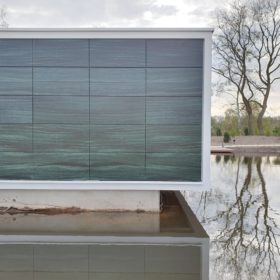
Taiwanese manufacturer Heliartec Solutions is offering BIPV panels for building facades that can be designed to mimic different kinds of textures in conventional building materials. The panels can also work as colored laminated safety glass and replace traditional cladding in the ventilated facades of buildings. They vary in length from 60 cm to 240 cm, with widths ranging from 30 cm to 120 cm. Depending on their size, the panels can offer power outputs of 90 W to 150 W per square meter.
Now is the time for the solar industry to capitalize on the benefits of sophisticated software platforms
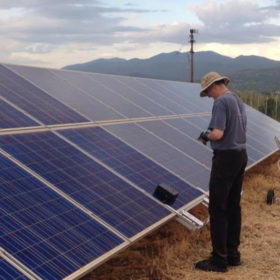
Amid the current disruption impacting renewable energy markets worldwide, solar power is proving to be a robust energy source. In China earlier this year, solar was the only form of energy generation that saw an increase in production from the previous year – rising by 12%. In this context, it’s becoming more important now than ever before for solar asset owners to recognize and take advantage of specialized solar software which can help mitigate business disruption in unexpected events and optimize long-term returns.

Solar inverters vs. cyberattacks
A U.S. research group is now developing new inverters to protect solar installations from cyberattacks. The researchers also aim to create new cybersecurity standards. Professor Alan Mantooth, the group’s research coordinator, said that inverters can be shut down if they are hacked, or contribute to grid instability and result in the overcharging of batteries, while potentially creating problems that we still don’t know how to address.
Comtec Solar insists it remains viable following dismal 2019
The Chinese solar manufacturer has finally addressed lingering uncertainty about its future with the release of the audited version of its 2019 financial results.
German solar installers expect massive market contraction this year
According to a recent survey by EuPD Research, political conditions are to blame for the expected slowdown, rather than the coronavirus pandemic. The potential failure to remove the 52 GW cap for solar incentives is expected to have a much stronger impact on potential investors.
Falling power prices could benefit mega-sized solar and wind projects
The Covid-19 pandemic will create a “perfect storm” for Australia’s wholesale electricity market, as lower demand comes together with lower gas prices and the commissioning of large-scale solar and wind projects to depress power prices, according to a report by Melbourne-based consultancy RepuTex.
Canadian Solar calls Solaria’s ‘shingled’ cell patent claim ‘meritless and unfounded’
The patent infringement claim concerns a process for separating photovoltaic strips from silicon solar cells for use in more-efficient tiled or “shingled” solar panels.
New technique to determine best cooling technique for solar modules
A new paper published by researchers at Malaysia’s Multimedia University provides a new method to assess the effectiveness of different cooling systems for photovoltaic modules. The proposed technique relies on measuring the output of the module with added cooling and comparing this to its power rating under standard test conditions.
