
First Solar reaches $350m legal settlement with shareholders to halt 2012 lawsuit
The U.S. thin-film manufacturer continues to deny having misled stockholders over solar module defects between 2008 and 2012 and said the settlement had been reached to close the historic legal action and permit the company to remove the uncertainty associated with it.
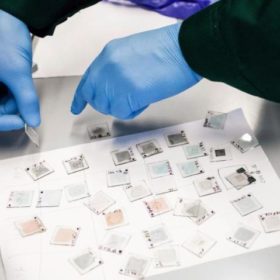
Japanese manufacturer acquires rights to produce 23.26% efficient CIGS perovskite cell developed by HZB and Kaunas University
The research group that developed the cell said the two materials used to produce it, dubbed 2PACz and MeO-2PACz, will soon be commercially available. The material consists of 1-2nm of self-assembled monolayers deposited on the surface of the perovskite by dipping it into a diluted solution.
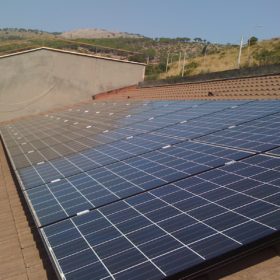
Italy rebalances PV market
The government has abrogated a controversial measure introduced last year which favored big developers in the allocation of fiscal incentives for rooftop projects linked to building renovation.
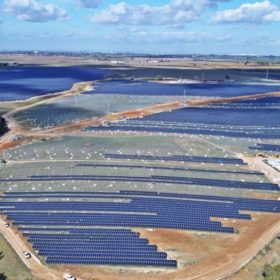
Baywa re: ‘We want more renewables projects in Spain and Portugal’
The developer issued the appeal for developers to come forward on the peninsula after selling its second subsidy-free Spanish solar project. The seller did not reveal how much insurance company Talanx has paid for the Don Rodrigo 2 facility.

A new perovskite material for solar applications
Barium zirconium sulfide is another chalcogenide perovskite being tested in relation to the development of more efficient solar cells. Researchers at Buffalo University, in New York state, have created a thin-film based on the material they say offers significant light absorption and good charge transport.

IFC to help Bangladesh with public-private solar partnerships
The lender’s private sector arm will help formulate a tendering process to identify the best suited partners for the development of PV projects in Bangladesh.

EDF seeks mounting structure providers
The renewable energy unit of the French energy giant has made a public call to source mounting structures for the large scale PV projects it wants to build in France up to 2023.
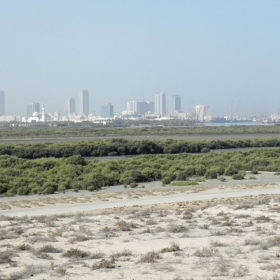
Emirate of Umm al-Quwain launches tender for 500 MW solar park
The UAE Federal Electricity and Water Authority is seeking expressions of interest to enable it to pre-select independent power producers for the project. The plant will be owned 60% by the government of Umm al-Quwain and the electricity authority, with the successful developer owning the balance.
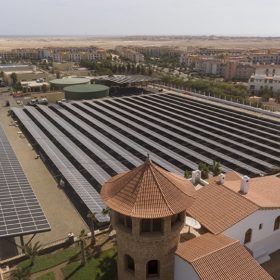
Cape Verde kicks off 10 MW solar tender
The Ministry of Industry, Trade and Energy has issued an expression of interest to pre-qualify developers for two 5 MW solar plants. The facilities will be on the islands of Sal and São Vicente.

The world will add 142 GW of new solar this year
IHS Markit has predicted another year of global solar growth but a peek behind the headline figures shows uncertainty dogging the markets of China and India, two of the most important markets and biggest polluters.
