
Exeger and ABB to build ‘light harvesting material’ fab in Sweden
Swedish company Exeger says the dye-sensitized ‘light-harvesting material’ it will produce at its facility will generate enough power to prevent the need to recharge portable electronic devices, lengthening battery lifespan perhaps indefinitely.

Brazil’s Copel contracts another 121.6 MW
The energy provider concluded its second renewables auction on November 13, and has contracted 121.6 MW of wind and solar. Selected projects will be granted a 15-year PPA and will have to begin commercial operations in 2023.

Chinese module makers land another two big overseas orders
GCL and Canadian Solar provide further proof of the solar boom that is gathering pace around the world even as attention focuses on the Chinese market.
Chinese recovery will begin before year-end, according to Jinko
The Shanghai solar manufacturer has revealed another set of record-breaking quarterly figures and says it will shift 18-20 GW of modules in 2020, en route to generating revenues of $1.17-1.23 billion.
Israel’s largest solar park comes online
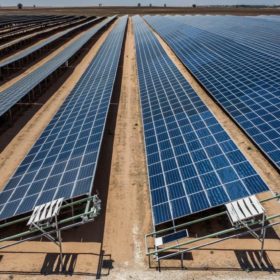
The clean energy arm of Israeli conglomerate Shikun & Binui will own the 120 MW plant near the village of Zeélim.

EDP: ‘PV will be one of the most dominant sources of power generation’
Portuguese electricity and gas company EDP used the 2019 Web Summit event as an opportunity to undermine the role of fossil fuels.

Chile to hold new energy auction in June
According to the bidding terms published by the National Energy Commission, project proposals may be submitted by June 11 and the results will be announced on June 19. Successful bidders will secure a 15-year power supply deal and some 5.6 TWh of electricity is expected to be generated annually as a result of the new capacity.

Bangladesh sets solar import standards
Complaints about sub-standard, cheap PV imports from China – and notably, India – have been heeded by Dhaka, which has issued a requirement for modules, inverters, charge controllers and batteries to attain IEC electrical standards.
More claims of greenwashing at major US electric utilities
A survey reveals greenwashing among major U.S. investor-owned electric utilities, which have been accused of using disproportionately high ratios of renewable versus fossil fuel images and language, while at the same time helping to block renewable energy policies. pv magazine speaks to the lead researcher
A record year for trackers
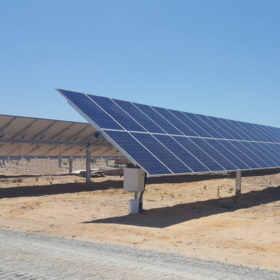
It was a record year for global shipments of single-axis solar photovoltaic (PV) trackers in 2018, as they increased by more than 40%, surpassing 20 GW globally for the first time, writes IHS Markit senior analyst Camron Barati. While the United States continued to be the largest individual market for single-axis trackers last year, shipments also increased in Mexico, Australia, Egypt, Spain, and other large utility-scale markets.
