
British capacity market row continues over £1 billion payment insecurities
The bickering around the British Capacity Market is not over yet. The European Commission has closed its formal investigation into the market mechanism’s alleged violation of EU State Aid rules, finding no violations of that kind. But footing the bill for the year-long suspension of the scheme might prove complicated.
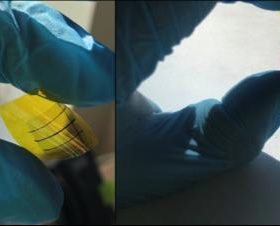
International research group claims 8.8% efficiency for amorphous solar cell
The new cell is based on a p-type transparent conductor made of carbon nanotube fibers. The device is said to offer 16% more efficiency than rival amorphous cells.
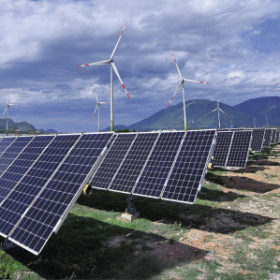
A new converter topology for hybrid wind-solar
A researcher has proposed a new approach to apply maximum power point tracking techniques to optimize electricity production in wind-solar power projects. The permanent magnetic synchronous generator hybrid model used in the study is based on a multi-input rectifier stage which is said to be able to eradicate current harmonics and eliminate the need for extra input filters.
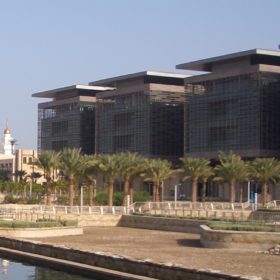
Organic dopants for a stable perovskite
Researchers at Saudi Arabia’s King Abdullah University of Science and Technology have demonstrated a method they say could improve the stability of perovskite structures. The group found adding an organic dopant served to increase the strength of chemical bonds between organic and inorganic elements of a perovskite.
Calculate the cost of PV system with free online tool
The PVP4Grid project, involving 12 European organizations, wants to increase solar self-consumption system deployment. The project has launched an online tool to enable homeowners to calculate the cost of PV.

Europe: The time for large-scale PV is now
The past year has marked a watershed moment in the global energy transition, driven primarily by the fact that public awareness of the challenges posed by climate change has skyrocketed.

Côte d’Ivoire gets World Bank support for 60 MW of solar
The African country has joined the World Bank’s Scaling Solar Program. Two PV plants will be located in Touba and Laboa, in the northeast of the country.
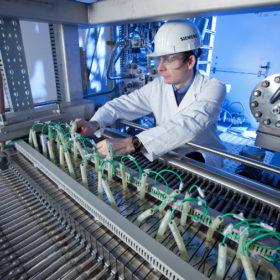
Green hydrogen to reach cost parity by 2030
Recent analysis from Wood Mackenzie predicts green hydrogen, produced primarily by solar electrolysis, will reach cost parity in Australia, Germany and Japan by 2030.
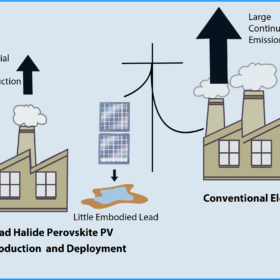
Benefits and risks of lead halide perovskite photovoltaics
Lead halide perovskite PVs (LHP-PV) have rapidly emerged over the last decade as a potentially viable thin film PV technology, because of their high efficiency and potential for low manufacturing costs. However, concerns remain over potential impacts to the environment and human health arising from the use of toxic lead in LHP-PVs.
Hanwha vows ‘immediate appeal‘ in event of ITC summary decision
With the Q Cells solar business warning it is preparing an instant appeal if a U.S. ITC judge rules against it Stateside, the chemical company parent announced its solar panel business saw a year-on-year, third quarter rise in revenue from KRW818 billion to KRW1,638 billion.
