
Shakti Pumps raises funds to build 2.2 GW solar module plant in India
Shakti Pumps (India) Ltd. has raised INR 2.93 billion ($34.2 million) through a qualified institutions placement to fund a greenfield 2.2 GW solar cell and module manufacturing facility in central India.
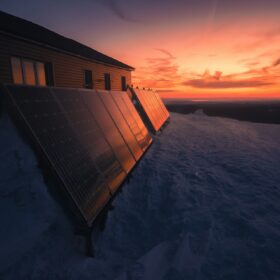
Optimizing photovoltaic systems in harsher climates
A recent report from the International Energy Agency (IEA) Photovoltaic Power Systems Programme (PVPS) covers guidance on improving the performance of PV systems deployed in climates such as deserts, tropical regions and snowy areas.

NREL develops translucent solar panels for bigger, better crops
Researchers at the National Renewable Energy Laboratory grew tomatoes under translucent solar panels, which could play a promising role in agrivoltaics.
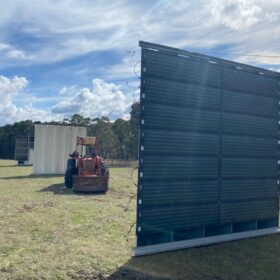
New vertical agrivoltaic system from Australia
Australian company Solspan has unveiled a 6.4 kW vertical solar wall system for applications in agrivoltaic projects. It measures 4 m x 4 m and can be interconnected with other units to create MW-sized systems.
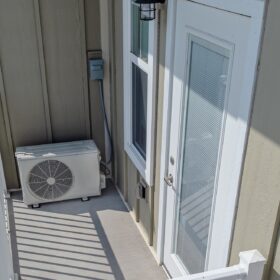
European heat pump customers face ‘fragmented’ installation journey
Apricum says in a new white paper that despite rising demand for combined energy systems with heat pumps in Europe, the installation process remains fragmented and difficult for customers.

Financial guarantee unlocks 109 MW for renewables in Moldova
Moldova’s government says developers have returned 30 grid connection permits for renewable energy projects since it introduced a financial guarantee scheme aimed at freeing up network capacity for viable investments.
‘Grid-forming technology is no longer experimental – it’s here and working’
In grids increasingly dominated by renewables, grid-forming technology is emerging as critical tool for maintaining stability and ensuring reliable power system operation. In this interview with ESS News, Rui Sun, Sungrow’s Deputy General Manager-Grid Technology Center, explains how grid-forming works, why it matters, and where the technology is already proving its value. He elaborates on technical challenges, regulatory gaps, and why grid-forming could soon become the new industry standard.

Australia grants major project status to 6 GW power export plan
SunCable has welcomed the Australian federal government’s decision to renew major project status for its Australia-Asia PowerLink, which aims to deliver up to 6 GW of renewable power from the Northern Territory to industries and urban centers in Darwin and Singapore.

Italy launches floating PV tender
The Italian authorities have opened a tender to support the deployment of about 50 MW of floating PV capacity.
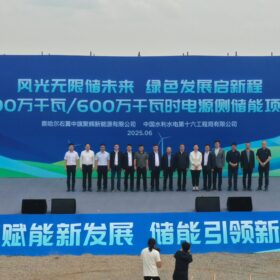
PowerChina breaks ground on world’s largest power generation-side battery storage project
On June 26, the construction of the world’s largest power generation-side energy storage project in Ulan Chab, Inner Mongolia, officially began. This 1 GW/6 GWh project, using lithium iron phosphate (LFP) technology, aims to enhance grid stability and support China’s renewable energy transition.
