IRENA presents its crash course in adopting renewables
The International Renewable Energy Agency has examined how common ground between sectors; digitalization; and technological innovation can transform the energy system and lower the cost of renewables. Storage technologies such as behind-the-meter applications, utility-scale storage and power-to-x are working in the right direction and much can be learned about digitalization from other sectors.
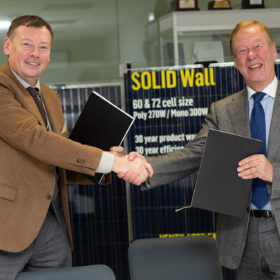
Valoe and Solitek join forces to produce IBC cells in Lithuania
The Finnish PV equipment provider and the Lithuanian PV panel maker will manufacture IBC solar cells at Solitek’s factory in Vilnius with an initial production capacity of 60 MW.

Indian government approves $6.48bn for rooftop and farmland solar
As national elections approach, prime minister Narendra Modi has signed off a huge check to finance national programs to subsidize household and community PV and to drive solar pump deployment in the nation’s fields.
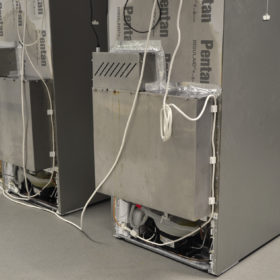
Storage Highlights Countdown #6; Load shifting fridges – ZAE Bayern
A few weeks out from the Energy Storage Europe conference and pv magazine is featuring the top ten developments in the field as our Energy Storage Highlights, selected by an independent jury of experts. Yesterday, we presented a ’70s revival of a ceramic high temperature battery.

China stirs the PV world – by preparing to shift to auction mechanism
Projects not encompassed by the new, central-subsidy-free, ‘grid-parity’ regime will be eligible to bid for a government subsidy. But, at a reported $446 million, the pot is not very big.

Ardian, White Summit invest in Jinko Power’s 182.5 MW solar project in southern Spain
The €125 million solar park is under construction near Seville. The project was selected in an auction held by the Spanish government in July 2017.
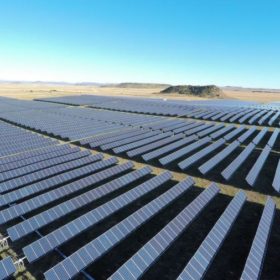
A specter is haunting South Africa, renegotiation of PPAs signed between 2011 and 2012
As national utility Eskom faces a financial and operational crisis, rumors are spreading that the government may ask independent power producers to renegotiate the tariffs of PPAs awarded in the first two rounds of its renewable energy program. South African solar association SAPVIA has already given short shrift to the idea.
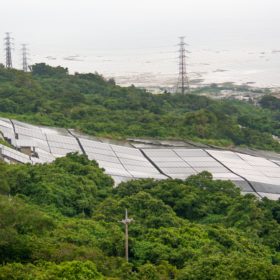
Japan proposes 22% commercial solar FIT cut in latest move to trim costs
With the transition to an auction procurement mechanism under way, Japan is this year set to expand the range of projects subject to the tender system from 2 MW-plus to 500 kW and above. With certain FIT cuts for projects with more than 2 MW capacity set to take effect in the second half of the year, the Ministry of Economy, Trade and Industry has now proposed reducing tariffs for 10-500 kW commercial PV systems.

Spain’s third interconnection with Morocco could be Europe’s chance for African PV – or a boost for coal
The two nations have signed a memorandum of understanding to build a third power link connecting their electricity systems. The news will again initiate hope for the transfer of solar energy from Africa to Europe, but is that hope justified?

Utility-scale PV all set for growth in Belgium
The energy regulator of Flanders has set a provisional feed-in premium of €0.02595/kWh – to be added to the spot market price – for a 1.35 MW solar project under development in the region. That is considerably more affordable for public support than the feed-in premium of €0.078/kWh the VEA set a year earlier for a 100 MW project under development by Engie.
