
Interview: Solar is paving its own road in Brazil, regardless of politics and economy
In an interview with pv magazine at this year’s Intersolar SA in Sao Paulo, Rodrigo Sauaia, president of Brazilian solar association, ABSSOLAR discussed the current issues and opportunities in Brazil’s PV market. The association is calling on the Brazilian Government to contract up to 2 GW of solar power in future auctions, and to maintain current rules for DG. The private PPA segment, meanwhile, which only a year ago appeared unviable, has begun to show positive results. All in all, solar in Brazil is growing, despite the hurdles created by a difficult political and economical environment.
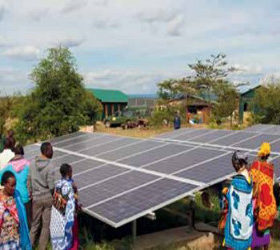
Solar to account for 9% of new energy capacity in Africa in next 2 years
An Africa power sector scorecard shows that solar will make inroads into the African energy sector over the next two years, accounting for 9% of new capacity additions, as renewables uptake across the continent continues to grow.
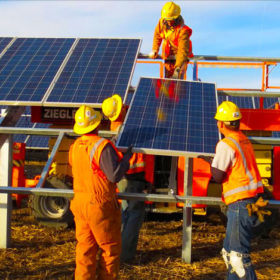
Clean tech transition could generate 65 million jobs, save $26 trillion – study
The New Climate Economy and OVO Energy, together with the Imperial College London, have published two independent reports pointing at the tremendous financial advantages resulting from clean tech transitions. Carbon pricing schemes could reap global sales of around US$2.8 billion, they say. Wide-spread use of storage, V2G, and electric heating could further save U.K. homes around $258 per year.
Shunfeng posts slight increase in shipments, sales, but ballooning net loss
The parent company of Chinese solar module maker, Suntech saw its net loss almost quadruple in the first half of this year, while net revenue grew year-on-year by just 0.7%. Sales of solar products in the period reached around 1.9 GW, and the group’s total installed operational PV capacity reached 1.5 GW at the end of June.
China’s Irico sees big H1 profit increase, confirms plans for 2 GW module fab
Chinese glass and display device manufacturer, Irico saw total profit for the first half of 2018 increase more than 500% over the same period in 2017, thanks in part to increased revenue from its solar glass business. The company also confirmed that preliminary construction is underway on its 2 GW module factory in China’s Jiangsu Province.
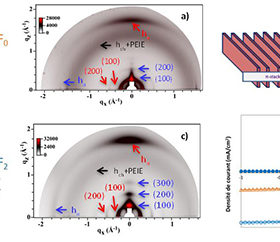
French research group changes polymer molecular structure to improve PV properties
The scientists have shown how the control of the molecular structure of a semiconductor polymer makes it possible to obtain a PV conversion efficiency of more than 10% for an organic solar cell.
US scientists create MPP algorithm to measure PV panel degradation
The algorithm is said to be able to examine the relationship between weather forecast data and the projection of electric circuit parameters. Through this innovation, Purdue University researchers claim they can interpret the routinely collected maximum power point (MPP) time-series data, to assess the time-dependent “health” of installed solar modules.

The Philippines needs a cost-effective net metering policy – report
Under the current scheme, rooftop PV remains far below its huge potential in the country. Regulatory, administrative and financial hurdles are preventing more electricity consumers from installing rooftop arrays, as well as the resistance of local utilities.
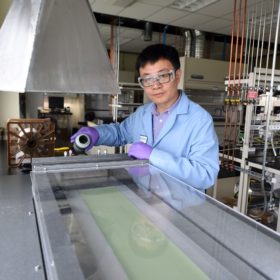
US scientists announce breakthrough in hydrogen production
Researchers from the Idaho National Laboratory have developed a new type of electrode for hydrogen production through electrolysis – water splitting. The team has used the electrode to demonstrate efficient hydrogen electrolysis at temperatures far lower than previously possible, which could lead to significant cost reductions in large-scale hydrogen production.
Indian PV installations fell by half in Q2
In the second quarter, India installed solar projects amounting to 52% less capacity quarter-over-quarter, due to uncertainties around trade cases, module price fluctuations and PPA renegotiations prompted by record low solar tender bids.
