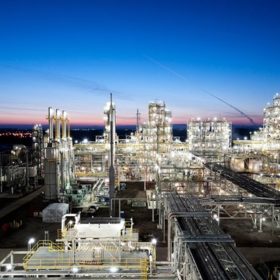
US members of congress warn of REC Silicon plant closure
A group of U.S. senators and representatives from Washington and Montana led by the top democrat on the U.S. Senate Energy and Natural Resources committee are calling on President Trump to negotiate with China and save REC’s Moses Lake facility.
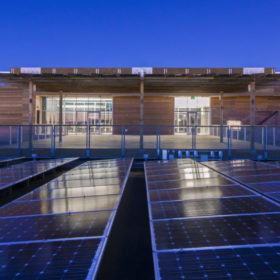
AlsoEnergy merges with Locus Energy
AlsoEnergy has acquired/merged with its third energy monitoring and asset management company this summer. This most recent move brings 25 GW and 190,000 projects under AlsoEnergy’s responsibility.
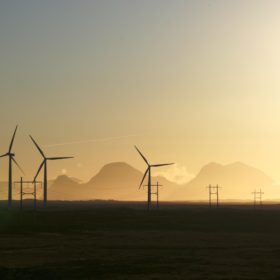
Norway’s Statkraft aims for 2 GW of solar by 2025
Norway’s state-owned hydropower and wind company plans to invest around NOK 10 billion (US$1.23 billion) in wind and solar between 2019 and 2025.
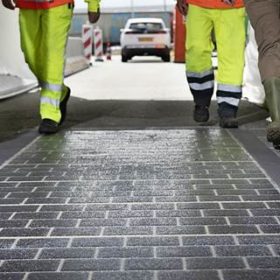
Netherlands to test viability of solar roads
Although solar energy roads are still considered economically unviable, the Dutch water management agency, Rijkswaterstaat announced it will investigate their potential as an alternative to the lack of surfaces for PV deployment in the Netherlands.
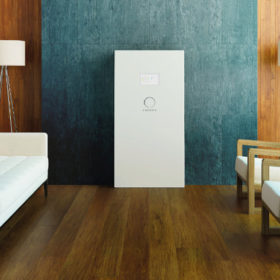
German equipment suppliers take lead in European storage market, report says
German suppliers may still play a central role in providing residential storage systems, however the increasing number of Asian manufacturers on the European market is undeniable. Particularly in the U.K. and Italy, they have captured the lion’s share of sales.
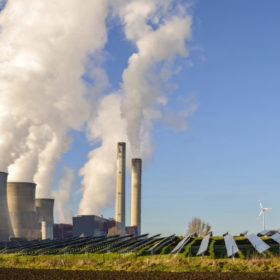
Banks turn their back on coal amid emissions concerns
While global coal mining companies are enjoying the highest prices in years on the back of boosted Asian demand, banks and financiers are increasingly ending their support for coal power. London-based Standard Chartered the latest to stop financing new coal-fired stations.
Eni joins race for Africa’s clean energy market
Via an agreement with the United Nations Development Programme (UNDP), the Italian oil company aims to increase its presence in Africa’s renewable energy markets. It already invests more than half of its budget in the region.
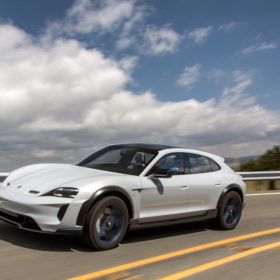
Porsche stalls polluting fuel amid ‘dieselgate’ and EV push
After the emissions scandal, many customers have turned their backs on diesel, partially due to environmental concerns, partially out of fear of a future bans on the fuel. Porsche says it has not had diesel engines in its portfolio since February, and will now scrap production altogether.
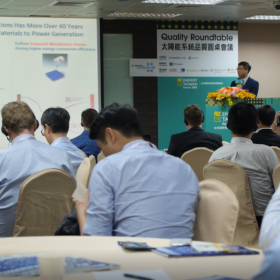
pv magazine Quality Roundtable, Taiwan: Carrier-induced solar cell degradation: Solved (sort of)
Solar cell manufacturers are always on an R&D race to improve efficiency. But even with their efforts, today you can still expect up to about a 3.5% loss from carrier- or light-induced degradation, industry insiders claimed last Thursday at pv magazine’s Quality Roundtable, held at Energy Taiwan 2018 in Taipei.
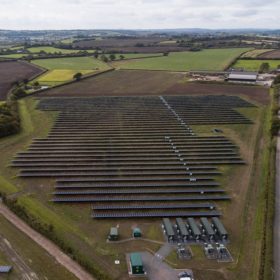
UK opposition party pledges emission-free energy system
Labour this morning unveiled plans for an energy system free of greenhouse gas emissions by 2050, but it is unclear what proportion of the party’s “clean energy” mix would be met by nuclear.
