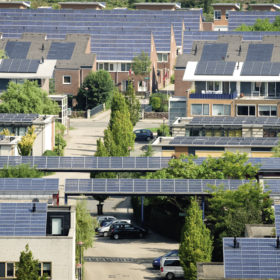
Residential solar could save energy system €1.77 bn in Andalusia alone – study
Looking at a scenario, in which the Spanish residential solar market is booming again, energy consultancy, ecoSynergies finds that the energy system could save billions, both in terms of CO2, and fuel and grid costs. Additionally, introducing the EU’s suggestion to fairly compensate prosumers for their surplus energy, would allow households to slash payback times for their solar systems by more than a half. In some cases, the amortization period could go down from 25 to seven years.

Beirut Energy Forum: Lebanon’s solar PV takes off
Lebanon’s International Beirut Energy Forum (IBEF) 2018, which took place last week in the country’s capital, saw the announcement of various solar tenders that depict the domestic PV sector’s take off.

“Optical Tweezers can benefit solar cell research” – Interview
pv magazine interviewed Ricardo Arias González, who holds a PhD in Physical Sciences and introduced the Optical Tweezers applied to biology in Spain. It is one of the tools of photonics for which Arthur Ashkin received the Nobel Prize in Physics in 2018, together with Donna Strickland and Gérard Mourou.

Brazil’s Cemig contracts 152 MW of wind, solar capacity in second auction
Selected projects, which have a combined capacity of 338 MW, are scheduled to begin delivering power in January 2022 under a 20-year PPA.

Everwood Capital launches €300 million fund for unsubsidized solar in Spain
Unlike its three previous funds, which focused on plants in operation, the Spanish asset manager will raise €300 million for the construction of plants without subsidies.
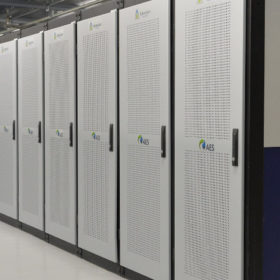
Fluence to supply additional 60 MW battery to UK project
Siemens subsidiary, Fluence has announced it will provide an additional 60 MW battery to power company UK Power Reserve, expanding the cooperation between the two companies to 120 MW, which Fluence says makes it the largest contracted energy storage portfolio transaction to date globally.
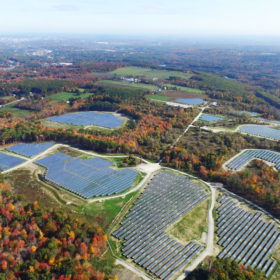
Who’s afraid of Virginia solar power?
The Commonwealth’s 2018 Energy Plan includes 5 GW of utility scale wind+solar, plus 500 MW of rooftop solar power, less than 1 MW in size, over the next decade.

Trump names pro-fossil ideologue to fill vacant FERC seat
Bernard McNamee has gone so far as to write an Earth Day op-ed on the benefits of fossil fuels. Coal bailout, here we come.
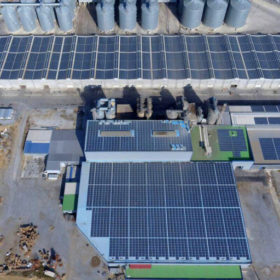
Turkey expected to reach 14 GW of solar in 2023
According to the Solar Energy Roadmap, released by Turkish PV association, Günder, the country may even achieve 38 GW of installed solar power by 2030. Several factors, however, could hinder this projected growth.
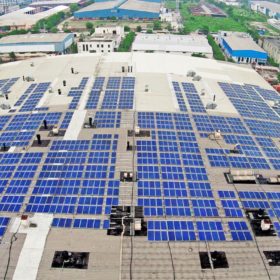
India’s Azure closes financing for 300 MW of PV, signs 415 PPAs
Azure Power has announced the early closing of a financing deal worth INR 4 billion (around US$58 million) for a 100 MW solar plant in the Indian state of Karnataka; and INR 6 billion (around $88 million) for a 200 MW solar power plant in Rajasthan. It also signed 415 rooftop solar PPAs in Madhya Pradesh.
