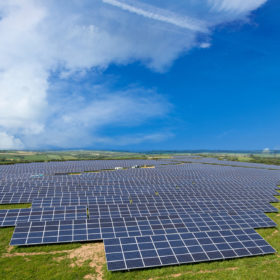
UK: Renewables can compete in balancing market, may be eligible for capacity market
Offgem has granted Limejump access to the balancing market via its VPP, meaning renewables can, for the first time, participate. Meanwhile, under its latest consultation on the capacity market, the government is considering granting access to renewables.

India: Court clears solar imports from customs without paying safeguard duty
As per the court order, Shapoorji Pallonji can retrieve its solar PV panel consignment at Chennai port, which has been cleared by customs, provided it pays the safeguard duty in case the related notification is upheld.

China sets up International Investment Alliance for Renewable Energy
Although the Chinese government has recently scaled back solar energy development, it has created a new, large, alliance to reach more foreign markets. In addition to focusing on the shipment of PV modules, it will also address financing, EPC and O&M services.
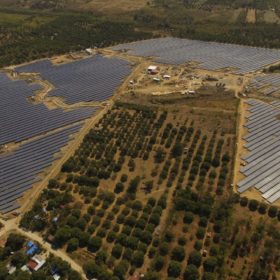
Philippine utility Meralco receives Southeast Asia’s lowest solar bid
In a tender for 50 MW of solar, local PV module manufacturer and project developer, Solar Philippines submitted a bid of P2.34 (US$0.044) per kWh.

The weekend read: “It’s all about controlling the hydrogen”
When pioneering and award-winning solar researcher Stuart Wenham passed away suddenly shortly before Christmas last year, some in the PV industry may have wondered what would become of his research into the role of hydrogen in crystalline silicon cells. His daughter, Alison Ciesla is answering that question alongside Wenham’s former team at UNSW, advancing its work into the crucial role of hydrogen in the degradation of silicon cells.

Australia to get first solar-powered crypto mining farm
A data center, which will be used for crypto and Bitcoin mining, will be powered by a combination of solar power generated at an adjacent 20 MW solar PV farm and coal-fired generator.

Trina to supply 167 MW modules to Europe’s largest PV plant
The Chinese solar module manufacturer will supply 167 MW worth of modules to what is on track to becoming Spain’s, and Europe’s, largest PV plant when completed.

Australia’s national electricity policy moves forward, but roadblocks remain
Mixed messages have emerged from today’s meeting between the Australian state and federal energy ministers’ meeting, after what was meant to have been a decisive point for the National Energy Guarantee (NEG) policy measure. Fundamental opposition from some states under Labor governments exists, however an agreement to release the draft legislation was reached – after it passes the test of the Federal Liberal party room.
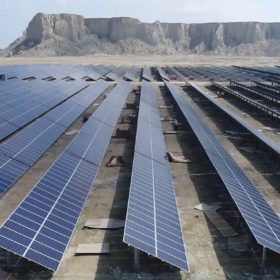
5 GW of renewable plans hang in the balance following reenaction of Iranian sanctions
As U.S. President Trump re-imposed sanctions on Iran, many solar companies – predominantly from Europe – were in the process of developing massive project pipelines in the country. These are now in jeopardy, even with blocking statute imposed by the EU. Those seeking to pursue plans demand safe financial channels from the EU in order to continue developing PV projects, and to signal a clear commitment to the Iran Nuclear Deal.
Indian court to hear Vikram Solar’s safeguard duty petition next week
The Government of India will also consider changes to the 25% safeguard duty imposed on solar cell imports from China and Malaysia only after the next hearing in the Odisha High Court, which stayed the levy.
