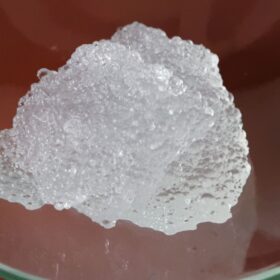
Conductive smart hydrogels as battery electrolytes: Promising for lithium, sodium, and zinc-ion chemistries
Hydrogels offer promise in batteries as an electrolyte, including lithium and sodium chemistries, due to being inherently more safe.
Electrification alone may not shield firms from gas-linked prices
With electricity markets still tied to natural gas in many regions, battery storage is emerging as a tool to manage price volatility and reduce exposure to grid-driven risks.
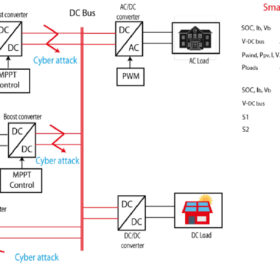
All emerging cyber threats targeting power infrastructure at a glance
Researchers in Moroco analyzed cybersecurity challenges in smart grids, highlighting AI-driven detection and defense strategies against threats like distributed denial-of-service, false data injection replay, and IoT-based attacks. They recommend multi-layered protections, real-time anomaly detection, secure IoT devices, and staff training to enhance resilience and safeguard power system operations.
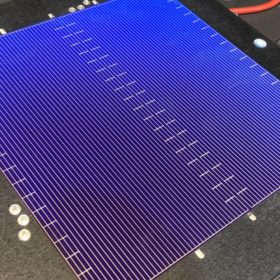
The impact of annealing on copper-plated heterojunction solar cells
A UNSW-led team found that annealing conditions significantly affect stress, strain, and microstructure in copper-plated heterojunction solar cell contacts, with fast annealing increasing microstrain in both copper and indium tin oxide.

New Time targets large-scale perovskite production in Italy
New Time has outlined a four-year roadmap to industrialize perovskite solar cells in Italy, with pilot production planned within three years and full-scale output to follow.

How much agrivoltaic shading is enough
Spanish researchers found that semi-transparent silicon PV greenhouses boosted tomato fruit weight by 25% while generating 726.8 kWh over two seasons, outperforming cadmium telluride PV and shaded controls. The PV-Si system balanced sunlight, temperature, and energy, showing strong agrivoltaic potential.
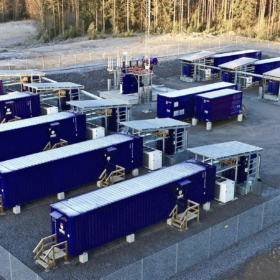
Neoen unveils large-scale battery projects in France, Japan
Neoen has announced two battery energy storage system (BESS) projects in France and Japan, expanding its footprint in both markets with installations totaling 348 MW and 896 MWh.

Chinese PV Industry Brief: Sungrow storage overtakes inverters in 2025
Sungrow says energy storage systems overtook PV inverters as its largest business segment in 2025, as the company posted double-digit revenue and profit growth.
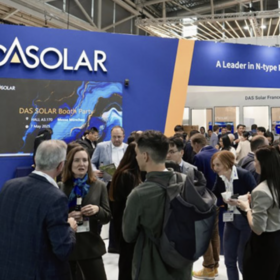
TCL Zhonghuan to acquire control of DAS Solar in consolidation move
TCL Zhonghuan has agreed to take majority control of Chinese solar manufacturer DAS Solar, a producer of advanced n-type modules based on tunnel oxide passivated contact (TOPCon) and back-contact (BC) technologies.
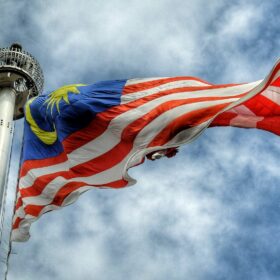
Malaysia’s solar capacity surpasses 5.7 GW
Reports from the International Energy Agency’s Photovoltaic Power Systems Programme (IEA-PVPS) indicate Malaysia added over 1.4 GW of solar in 2025, with more than 5.7 GW now deployed across multiple government schemes.
