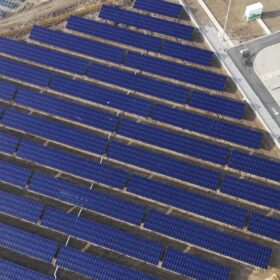
Ground-mounted perovksite solar module testing field goes online in China
The 1 MW testing facility is located in Xuwei New Area, Lianyungang, Jiangsu province. It is designed to generate long-term field data on large-area perovskite modules in coastal conditions.
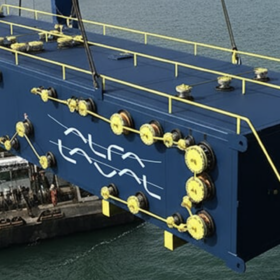
Alfa Laval to build South Korea’s first large-scale liquid air storage system
Swedish engineering company Alfa Laval and South Korea’s Institute for Advanced Engineering (IAE) plan to build a liquid air energy storage (LAES) facility designed to liquefy up to 10 tons of air per day for long-duration grid balancing.
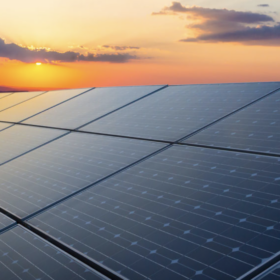
Enel Colombia’s 180 MW Atlántico solar park starts supplying national grid
Enel Colombia has started transmitting power from its Atlántico solar project near Sabanalarga and Usiacurí, Colombia, featuring more than 403,000 panels and an investment of around $200 million.

Japan adds 5.8 GW of solar in 2025
Estimates indicate Japan added between 5.8 GW and 6 GW of solar last year, likely taking the country past 100 GW of cumulative solar capacity. Last year’s installations were led by the commercial and industrial market, while the residential sector also saw increased demand.
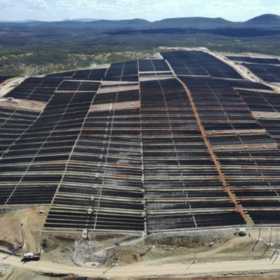
Brazil’s 439 MW Bom Jardim solar site begins testing phase
The Bom Jardim PV complex, a 439 MW solar installation in Icó, Brazil, has begun test operations on four of its 10 plants, with full commercial commissioning expected by December 2027.
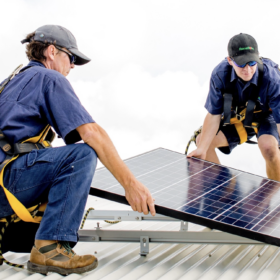
AI energy management system to unlock VPP potential
Researchers at the University of New South Wales (UNSW) and installer Aussie Solar Batteries will develop and test AI-driven energy management platforms to optimize solar and battery systems and support virtual power plant (VPP) deployment.

European Commission proposes Made in EU requirements for solar inverters, cells
The Industrial Accelerator Act says solar projects awarded through public procurements or other public support schemes would need to feature Europe-made solar inverters and cells within three years after the act becomes law. For battery energy storage systems, similar requirements would be introduced using a phased approach from one year after the act enters force.
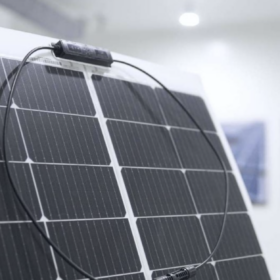
Heliup raises €16 million to scale lightweight solar panel production
French solar manufacturer Heliup has raised €16 million ($18.6 million) to scale production of lightweight solar panels designed for commercial and industrial rooftops with low load-bearing capacity.
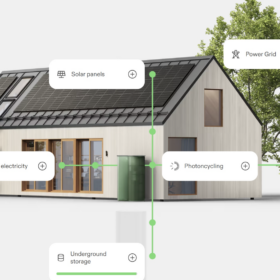
Photoncycle raises €15 million to launch seasonal hydrogen home storage
Norway’s Photoncycle has raised €15 million ($17.4 million) to develop a seasonal home energy storage system that converts excess solar power into ammonia-based hydrogen for winter use.
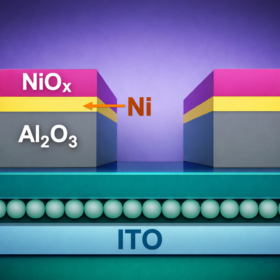
Korean researchers build back-contact perovskite solar cells with lower recombination losses
The research team developed the perovskite solar cell with a spin-coated bilayer tin oxide electron transport layer that boosts charge extraction, achieving a 4.52% efficiency and improved stability.
