
Dominican Republic brings Caribbean’s largest solar plant online
The Dominican Republic has switched on the 162.6 MW Cotoperí Solar complex, developed by Acciona Energía and local investors. It is the largest PV installation in Central America and the Caribbean.
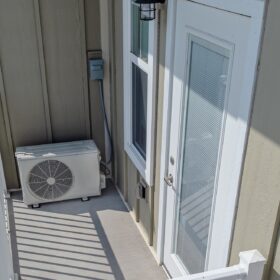
More than 100,000 applications for UK heat pump subsidy
Latest boiler upgrade scheme (BUS) data reveals more than 100,000 applications for heat pump grants have been made since support scheme launched in May 2022. Demand has significantly increased in 2025, and the scheme was expanded in early November to include an air-to-air heat pump grant.
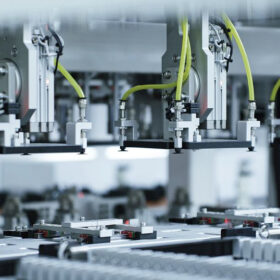
JinkoSolar achieves 34.76% efficiency for perovskite-silicon tandem solar cell
JinkoSolar says it has increased the efficiency rating for its perovskite-silicon tandem solar cells from 34.22% to 34.76%, confirmed by China’s National PV Metric & Testing Center (NPVM).

Enerin offers industrial heat pump delivering heat up to 250 C
The Norwegian industrial heat pump specialist said its HoegTemp system has a heat supply capacity of 0.2 MW to 5 MW and a coefficient of performance above 2 at high lifts.
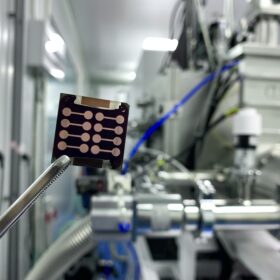
All-perovskite tandem solar cell with dipolar passivation achieves 30.1% efficiency
Researchers in China have developed a dipolar passivation method that reduces defects and improves charge transport in solar cells based on narrow-bandgap tin lead perovskite. The approach has enabled the fabrication of all-perovskite tandem solar cells with efficiencies of around 30% and enhanced stability,

Synchronous condensers to play key role in Australian system security
The Australian Energy Market Operator (AEMO) says “timely investments” are essential to unlock the full value of renewables and reduce reliance on coal generators for system security as the nation’s clean energy transition continues.

Historic icons, modern energy: Why heritage buildings need solar roofing
Heritage buildings face mounting pressure to cut carbon emissions, but traditional solar panels often clash with their historic appearance and face public resistance. Building-integrated photovoltaics (BIPV) offer a discreet alternative, blending solar technology into roofing materials and enabling wider adoption across protected sites. As UK policy increasingly supports solar on historic buildings, BIPV presents a scalable solution that reconciles climate action with architectural preservation.
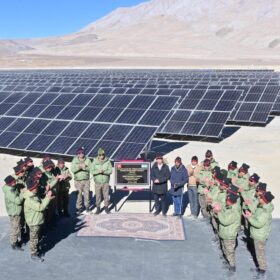
NTPC commissions solar-hydrogen-based microgrid in India
NTPC has developed a standalone solar microgrid system that uses hydrogen as the storage medium to deliver 200 kW of round-the-clock power throughout the year. Designed to replace diesel gensets at off-grid Army locations, the system provides a reliable and sustainable power supply even in harsh winter conditions, where temperatures can drop to –40 C at an altitude of 4,500 meters.
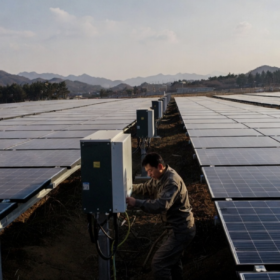
South Korean solar inverter industry raises cybersecurity concerns
South Korean solar inverter makers have jointly launched a new association of inverter manufacturers to coordinate domestic production, safeguard local expertise, and address import-driven market issues and grid stability challenges.
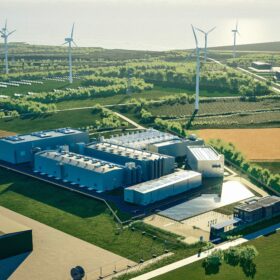
The Hydrogen Stream: EWE begins work on 320 MW hydrogen plant in Germany
EWE says construction has started on its 320 MW hydrogen plant in Germany as it seeks regulatory reforms, while Japan Suiso Energy and Kawasaki Heavy Industries have broken ground on a commercial-scale liquefied hydrogen terminal set to begin operations in 2030.
