
Thermocold debuts air-to-water heat pump for commercial buildings
The new product line covers 124–644 kW in heating and 128–632 kW in cooling, operates down to -15 C, and supports various configurations with R454B or R410a refrigerants.
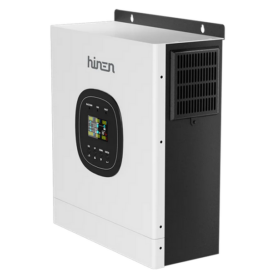
Hinen releases residential off-grid inverter
The 3 kW N3300S inverter combines a pure sine wave inverter with an integrated MPPT solar charge controller for small residential and hybrid PV systems. The unit supports multiple power sources, flexible battery chemistries, and rapid grid/off-grid switching.
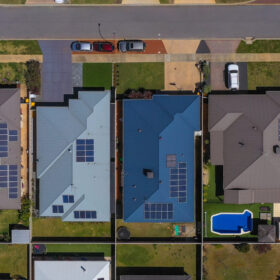
Rooftop solar rebounds in Australia, home battery demand surges
Australia’s rooftop solar market has bounced back into record-setting territory with 281 MW of new capacity registered across the country last month, marking the largest February total on record.
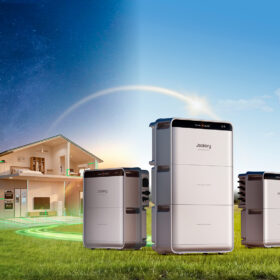
Jackery introduces SolarVault 3 series of residential solar storage solutions in the Netherlands
Two models in the series are designed to capture up to 4000 W of solar input with four independent MPPTs, while the third model – the SolarVault 3 Pro Max AC – is an AC-coupled solar storage solution that allows households to add battery storage without rewiring. The model is particularly suited to regions where net metering schemes are being phased out.
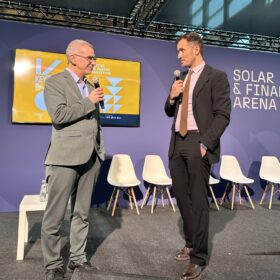
Key takeaways from Italy’s Key Energy trade show
Key – The Energy Transition Expo was held last week in Italy, featuring 1,065 exhibitors and 530 buyers. The event focused on energy-as-a-service and agrivoltaic projects, with operators saying agriPV standardization should be reached by 2030-32. Italian Energy Minister Gilberto Pichetto Fratin told pv magazine that coal and gas are strategic assets, noted that the “PV sector is maturing,” and urged the European Union to coordinate on gas storage and supply chains for modules and storage solutions.
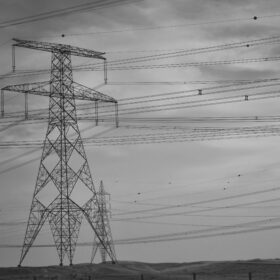
Growing pains: Grid congestion as a renewables bottleneck
The electricity grid is a real bottleneck for energy in the United States, and it’s not only utilities and grid operators who are struggling. Grid congestion also puts pressure on renewable energy project owners and is as much a business problem as it is a technical one, writes Alon Mashkovich, CEO of energy management business software supplier enSights.
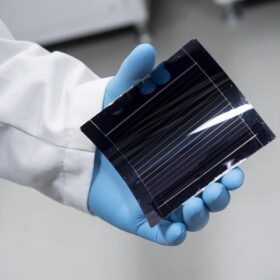
Why CIGS solar keeps lagging behind crystalline silicon
In an interview with pv magazine, Empa scientist Mirjana Dimitrievska explains that the CIGS photovoltaic technology, while promising for efficiency and flexible applications, faces persistent challenges in scaling lab-level performance to cost-effective, high-throughput industrial production, limiting its ability to compete with crystalline silicon. She also emphasizes that long-term stability, reliability, and material sustainability, rather than peak efficiency, are crucial for commercial viability, especially in niche markets like building-integrated and lightweight PV.
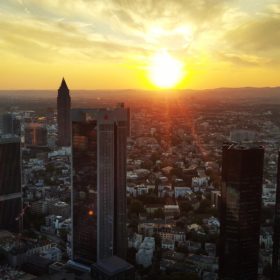
Photovoltaics reach 16.1% share of Germany’s electricity generation in 2025
Germany’s Federal Statistical Office (Destatis) says solar generation rose to 70.1 TWh in 2025, up 17.4% from the previous year, even as wind and hydropower output declined and natural gas generation increased 10.2%.

Photovoltaics for cattle dung gasification
Researchers tested a solar PV-powered system to gasify dried cattle dung, achieving higher energy recovery than grid-powered setups.Their techno-economic-environmental analysis shows the approach can cut emissions and be economically viable, though system utilization and operational factors strongly affect profitability.
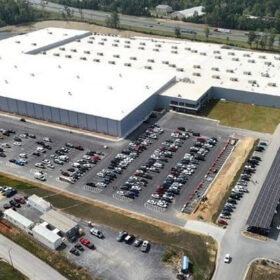
Qcells resumes US solar panel production after customs furlough
Qcells says it has resumed solar panel production at its Georgia manufacturing facilities after US Customs and Border Protection released seven solar cell shipments from South Korea that had been held under the Uyghur Forced Labor Prevention Act (UFLPA), forcing a furlough of 1,000 workers and temporarily halting output at the second-largest module factory in the United States.
