
Chinese province seeks proposals for 11.5 GW of offshore PV
The authorities in China’s Shandong province have identified 10 offshore sites close to the coastline where 11.5 GW of solar projects could be constructed. Binzhou, Dongying, Weifang, Yantai, Weihai, and Qingdao are some of the preferred areas.
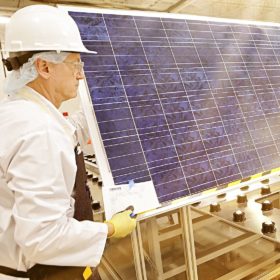
Canadian Solar plans to ramp up production capacity
Having warned of in-house solar wafer and cell capacity as recently as the third quarter of 2021, the company has announced it will be adding even more production lines this year.
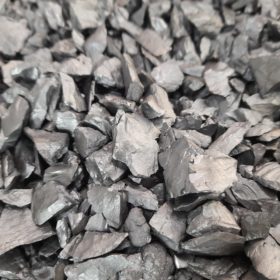
Chinese PV Industry Brief: Geely opens polysilicon plant
Automaker Geely has commissioned a new polysilicon factory in northern China, while ET Solar has opened a new 5 GW wafer factory in Vietnam. Poly giant GCL Technology, meanwhile, has confirmed that its board might issue common stock for a Chinese listing.

The Hydrogen Stream: Renault presents electric-hydrogen hybrid car with range of up to 800 km
In other news, Shinshu University researchers developed a graphene-wrapped molecular-sieving membrane that is reportedly 100 times more efficient than that of conventional polymer separation membranes. Topsoe aalso nnounced the construction of the “world’s largest electrolyzer production facility,” and Toho Gas said it would produce blue hydrogen in Japan for local consumption.
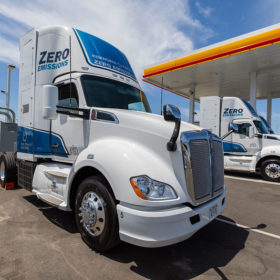
China dominates transport fuel-cell patents
The World Intellectual Property Organization says China accounted for 69% of the patents filed for transport-related fuel-cell tech in 2020, with road transport significantly dominating applications.
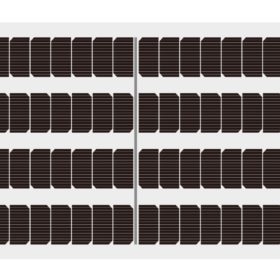
JinkoSolar showcases 13.08%-efficient transparent TOPCon solar module for BIPV, agrivoltaics
The new solar module can be purchased with different levels of transparency, depending on the project, with light transmittance ranging between 30% and 40%. It has a power output of 245 W to 300 W and a temperature coefficient of -0.30% per C.
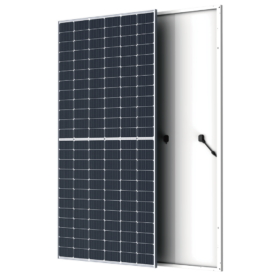
Hanersun launches 580 W TOPCon solar module with 22.38% efficiency
Hanersun claims that its new TOPCon solar modules are suitable for residential and commercial rooftops, as well as small-scale, ground-mounted PV plants. They have a temperature coefficient of 0.31%.

Solar-powered EV charger with integrated battery storage
Energy management startup Ez4EV has introduced an electric-vehicle charging solution with integrated battery storage. The complete unit-in-a-box can be charged using electricity produced from solar, compressed biogas, and compressed natural gas.
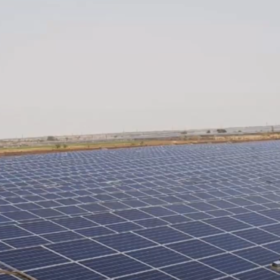
Mahindra Susten commissions 175 MW of solar in India
Mahindra Susten has switched on 175 MW (AC) of its 250 MW solar project in Bikaner district, Rajasthan. The massive installation, which uses bifacial modules, will supply electricity to Solar Energy Corp. of India over a period of 25 years at a price of INR 2.54 ($0.03)/kWh.
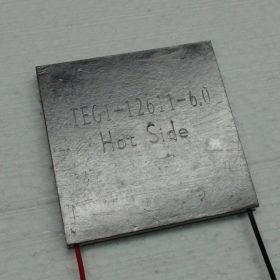
Upcycling silicon waste from end-of-life solar panels into thermoelectrics
Researchers in Singapore have developed a new technique in which polycrystalline silicon is pulverized into powder and pelletized into ingots. The process relies on spark plasma sintering to dope the silicon with germanium and phosphorus.
