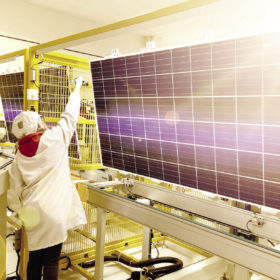
Canadian Solar prepares to rein in production capacity expansion plans
While the Sino-Canadian business expects high polysilicon and shipping costs to be a temporary problem, CEO Shawn Qu has acknowledged the company will have overcapacity in cell and wafer production lines by the end of the year.
A hybrid wind-solar-biogas sytem design including battery and thermal storage from PV modules’ excess heat
Tested in an off-grid location in India, the proposed approach includes the use of thermal storage from PV modules’ excess heat for space and water heating. The optimum configuration for the system was given by the combination of a 224 kW PV system equipped with a phase change material, a 206 kW wind turbine, a 420 kW biogas generator, a 633 Ah battery, and a 170 kW converter.
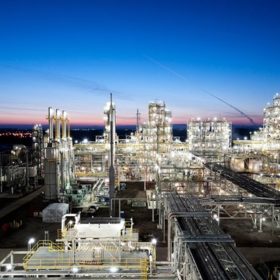
Hanwha Solutions buys 16.67% stake in REC Silicon
The investment made by the South Korean group should help REC Silicon restart polysilicon production at its US factory in Moses Lake in 2023.
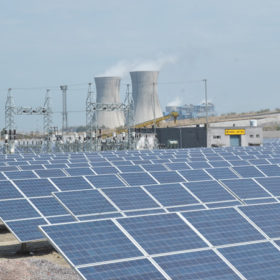
NTPC, Indian Oil to team up on renewable energy
NTPC Ltd. and Indian Oil have announced plans to work together on renewable energy generation and storage, as well as gas-based power, to support the refiner’s industrial facilities.

Soluna unveils 20kWh battery for residential and commercial applications
The Chinese manufacturer says the battery has a depth of discharge of 95%. It will be available for sale starting from Q1 2022.
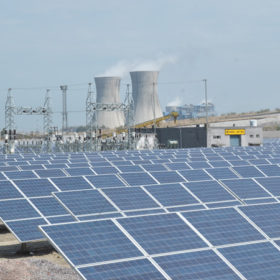
India to replace thermal power with renewables under existing PPAs
Indian generators and distribution companies will evenly split the gains achieved by bundling cheaper renewable energy with high-cost thermal sources.
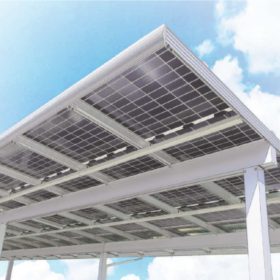
Scalable turnkey solar carport solution for commercial applications
Japanese energy company Sinanen offers a scalable solar carport that can host a minimum of four vehicles and can be deployed in the parking areas of factories and commercial buildings. The basic system is offered with a minimum capacity of 10.80 kW.
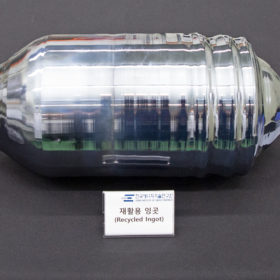
New tech to produce ultra-thin wafers with minimal silicon waste
South Korean researchers have developed a process to produce ultra-thin wafers without sacrificing any of the substrates. Their technique is based on a new approach involving the use of plasma-assisted epitaxial growth, in order to increase internal defects and porosity, rather than reduce them.
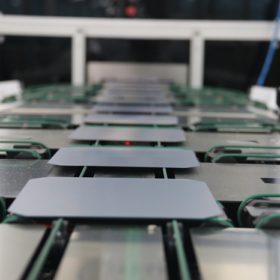
Chinese PV Industry Brief: Shuangliang secures another major wafer supply deal
The Chint group has also agreed to sell a portfolio of distributed solar projects with a capacity of 493 MW.

How to convert coal mine goaves into pumped hydro storage facilities
According to Chinese researchers, using abandoned coal mine goaves for pumped hydro facilities in combination with large scale solar and wind is not only technically feasible but can also provide an efficiency of 82.8% in yearly operation cases. They applied the model to wind and solar-rich northwestern and southwestern China.
