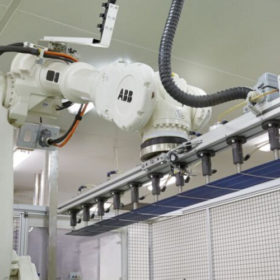
Risen to build 5 GW module line in Zhejiang Province, China
Chinese PV cell and module manufacturer, Risen Energy announced yesterday that it has started the construction of a new module factory in Zhejiang province in eastern China. The factory is set to have a total capacity of 5 GW.
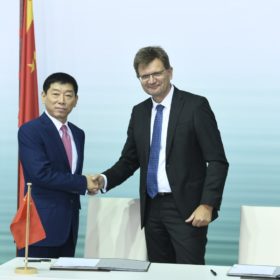
BMW, Tesla open factories in China, driving EV market in spite of trade-dispute
In the wake of the U.S.-China trade dispute, the Chinese government has loosened its policy on ownership caps for factory sites for foreign car brands. Previously, car companies could only retain 50% of the ownership of a factory and had to set up a joint venture with a Chinese partner. By setting up shop in China, Tesla can avoid import duties on its cars, to cater to a broader customer base.
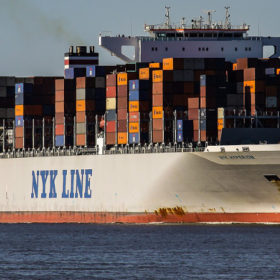
US proposes 10% tariffs on inverters, AC modules, non-lithium batteries from China
As the trade war escalates, PV inverters, solar panels with attached microinverters and battery storage products other than those which utilize lithium-ion chemistry, may be the latest victims.
JA Solar secures $68 million loan for equipment at 1.5 GW Vietnam wafer fab
Chinese manufacturer, JA Solar has secured a long-term buyer credit loan facility worth US$68.4 million for the procurement of equipment for its 1.5 GW wafer facility in Vietnam.
Solar corporate funding rises 15% YoY with $5.3 billion in H1 2018 – Mercom
Despite the uncertainty caused by U.S. solar panel import tariffs, deteriorating trade relations between the U.S. and China, and the looming consequences of China’s PV policy change, the solar industry saw a 15% YoY increase in corporate funding in the first half of 2018, on the back of a Q2 rebound, finds the latest Mercom Capital report.
Q4 could be a ‘hot market’ for solar contract negotiations following China’s changes – BNEF Q&A
In a Q&A with Bloomberg NEF (BNEF), two solar analysts tell pv magazine they see no PV module price rebound, continuing oversupply, and falling utilization rates. They expect Q4 could be a “hot market” for contract negotiations, while Chinese developers will start overseas construction earlier than planned for two key reasons.
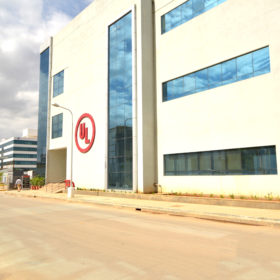
Complete ecosystem needed to ensure India’s solar success – UL India interview
The Indian Government must create a complete ecosystem to ensure the effective on-ground execution of its ambitious solar program, says Chakradhar Byreddy, Director–Renewable Energy, UL, Asia Pacific, during an interview with pv magazine. This includes investing in laboratory infrastructure, and skills for technical due diligence, energy yield assessment and forecasting.
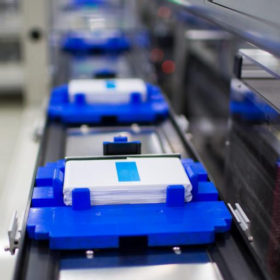
China’s CATL to invest €240 million in Europe’s first battery cell fab
The Chinese battery manufacturer has said it will establish a fab in Germany’s Thüringen with an annual capacity of 14 GWh. The battery cells will be primarily produced for the electric vehicle (EV) industry. Up to 600 jobs are expected to be created. In related news, BMW has entered a €4 billion long-term partnership with CATL.
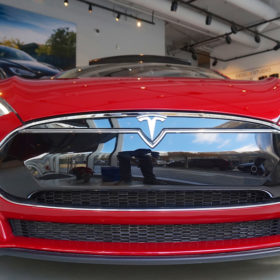
Global EV market growing sturdily despite trade dispute setbacks
EnergyTrend recognizes recent tariffs developments will hit the electric vehicle (EV) industry. Despite this, environmental regulations, as well as costs and technological advancement, will prevail and continue to drive EV sales globally.
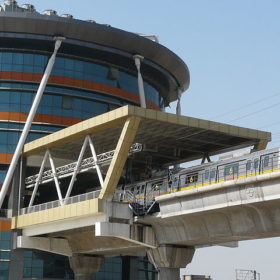
India: 750 MW Rewa solar project starts supplying power
The 750 MW Rewa solar power project, one of the world’s largest single-site solar power plants, has started operations.
