
Australia’s Tindo Solar plans expansion as ARENA funding reshapes outlook
Australian module maker Tindo Solar says Australian Renewable Energy Agency (ARENA) funding of AUD 34.5 million ($22.5 million) will support expansion at its South Australia facility as it navigates soft demand, technology shifts, and manufacturing constraints.

First Graphene, Halocell sign deal on graphene-based carbon paste
Graphene producer First Graphene has secured exclusive global graphene carbon paste production and sales rights with perovskite cell developer and manufacturer Halocell Australia.
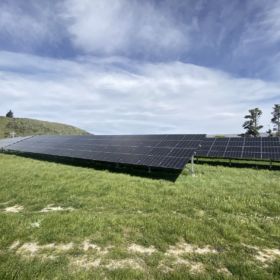
Hydro Tasmania seeking 1,500 GWh new solar, wind
Hydro Tasmania is seeking to increase its renewable energy generation to meet growing energy demand and support the Australian state’s industrial expansion.

The impact of electron irradiation on PERC, TOPCon solar cell performance
UNSW researchers have investigated the impact of electron irradiation on PERC and TOPCon solar cell performance and have identified bulk lifetime degradation as main power loss cause. Their work stresses the need for increasing radiation tolerance in commercial space silicon solar cells.

Australia’s Raystech to supply 1 GWh of Sungrow battery storage in 2026
Sungrow signed new and renewed distribution agreements with Raystech Group, Supply Partners and Tradezone at the All-Energy Australia 2025 exhibition, covering solar inverters, battery energy storage systems and multi-year module supply for residential, commercial and utility-scale markets.
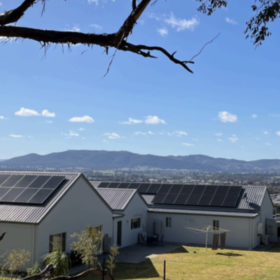
Australia installs 5.2 GW of solar in 2024
The International Energy Agency (IEA) says that Australia installed 5.2 GW of solar capacity in 2024, bringing the national total to 40 GW across distributed and utility-scale systems.
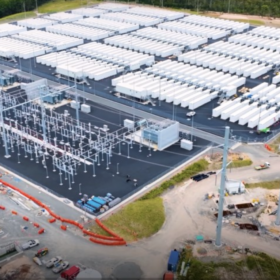
Waratah Super Battery transformer failure raises insurance questions
A transformer failure at the 850 MW Waratah Super Battery could trigger multimillion-dollar insurance claims and project delays, illustrating how a single unit outage can escalate at one of Australia’s largest battery projects.
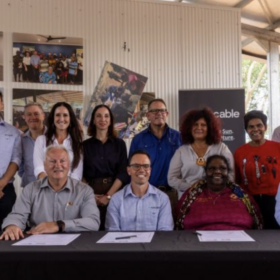
SunCable secures Northern Territory land deal for Australian solar farm
SunCable has struck a multimillion-dollar deal with traditional owners that will enable it to develop the biggest solar farm in Australia on a cattle station in the Northern Territory.
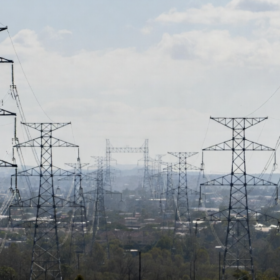
Australia grid delays pose risk to renewable energy targets
Intium says long and unpredictable grid-connection timelines are undermining investor confidence and complicating Australia’s clean-energy buildout.
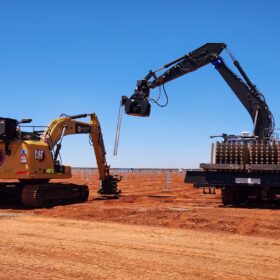
Australia backs Fortescue solar tech trial at Pilbara innovation hub
Australia’s renewable agency says the trial aims to demonstrate faster, lower-cost utility-scale solar deployment in remote regions.
