
Clean energy must be rolled out six times faster
To have any hope of restricting global heating to a maximum of 1.5 degrees Celsius, the renewables success story which saw 108 GW of solar deployed last year needs to be cranked up to the next level – and fast.

Power Ledger enables consumer participation in energy markets
Australian startup Power Ledger wants to scale up its offerings for much larger communities, as it has already verified its technologies in projects around the world. The Australian Energy Market Commission last week proposed a similar agenda.
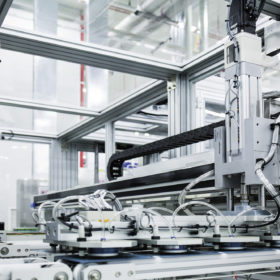
Hanwha vows ‘immediate appeal‘ in event of ITC summary decision
With the Q Cells solar business warning it is preparing an instant appeal if a U.S. ITC judge rules against it Stateside, the chemical company parent announced its solar panel business saw a year-on-year, third quarter rise in revenue from KRW818 billion to KRW1,638 billion.

ABB touts AI-supported industrial energy consumption management tool
A new application for ABB’s ‘Ability’ digital platform enables industrial customers to avoid peak charges without using of battery storage. The Swiss corporation has developed two apps for its energy management software with the help of an artificial intelligence specialist.

Engie Australia readies 2 GW renewables war chest
The French energy company is preparing a fund to develop clean energy in Australia over the next ten years. The move comes despite a federal energy policy vacuum that industry insiders fear is deterring investment.
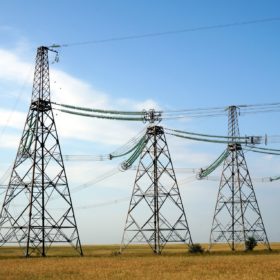
Solar electricity can retail for $0.027-0.036/KWh as renewables close in on global grid parity
The latest figures released by BloombergNEF show new solar and onshore wind power plants have reached parity with average wholesale prices in California, China and parts of Europe. The technologies are winning the race to be the cheapest sources of new generation for two-thirds of the world’s population.
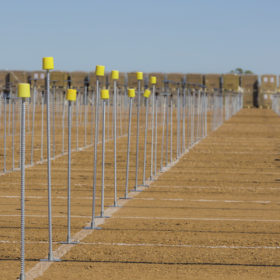
The race has only just begun
The Australian utility-scale PV and wind industries have just gone through a record two years of construction and commissioning. More specifically, writes Rystad Energy’s David Dixon, utility-scale PV has transformed from a megawatt-scale market to one measured in gigawatts. The resultant boom in utility-scale PV in the country has attracted developers, EPCs and OEMs, from at home and across the globe.

Ambibox reports efficiency world record for solar DC charging of electric off-road buggy
A German start-up achieved more than 99% efficiency when charging a vehicle developed by the Bochum University of Applied Sciences with electricity from solar cells. Ambibox’s DC charging technology was used in a research project in the Australian desert.
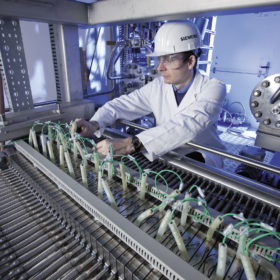
Fate of green hydrogen depends on ever cheaper renewables – for now
Analyst WoodMac has spelled out the urgent need to decarbonize the global hydrogen production industry. While the fuel can offer a sustainable grid balancing act for intermittent renewables, in its current fossil-fuel driven form it is pumping out more than 800 megatons of carbon into the atmosphere every year.
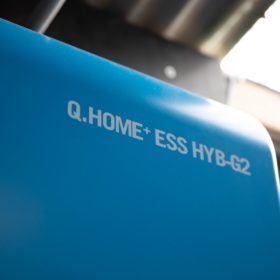
Q Cells to introduce Q.Home energy storage at All Energy
Q Cells will introduce its Q.Home hybrid inverter and battery system to the Australian market at the All-Energy event in Melbourne tomorrow. It is also introducing its new larger wafer module, which hits 355 Wp on a 60-cell format.
