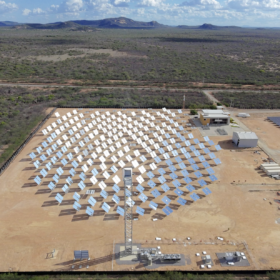
RayGen rolls out 1 MW ‘solar hydro’ power plant in Brazil
Australian solar and thermal energy storage company RayGen says it has achieved a major international milestone with the commissioning of a 1 MW integrated solar electricity and hydro energy storage plant in Brazil.
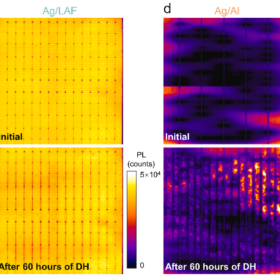
UNSW unveils new ageing method to assess TOPCon solar module degradation
UNSW researchers developed a chemically selective, nitrate-based, single-sided accelerated ageing method for TOPCon solar cells that replicates the mildly acidic environment inside EVA-encapsulated modules. The proposed approach enables rapid, physically meaningful screening of front-side metallisation stability, reliably predicting module-level degradation and reducing development time and costs, according to its creators.
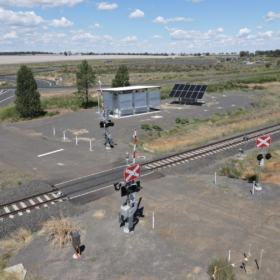
Inland Rail deploys solar-powered level crossings in Australia
Australia’s Inland Rail project says it has installed standalone solar power systems at two level crossings, removing the need for grid connections as construction progresses.
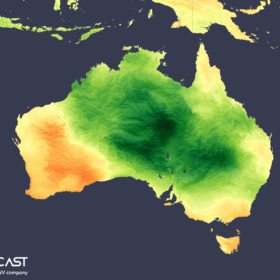
Wettest February since 2011 cuts irradiance across most of Australia
In a new weekly update for pv magazine, Solcast, a DNV company, reports that Australia’s wettest February in 15 years produced solar irradiance deficits of 15–30% across the country’s central and eastern regions.

Enphase launches AI home energy management system
Enphase Energy has introduced an AI software platform in Australia and New Zealand that enables homeowners to reduce energy costs, increase clean energy self-consumption, and control key household appliances.
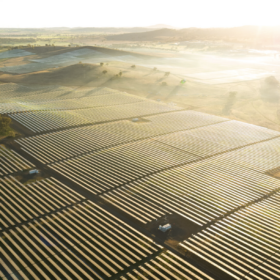
Ultra-low-cost solar could enable 2,000 GW market in Australia
Researchers from the Australian Centre for Advanced Photovoltaics say ultra-low-cost solar could deliver 1,000 TWh annually for domestic use and 2,600 TWh for exports under Australia’s long-term energy transition scenarios.
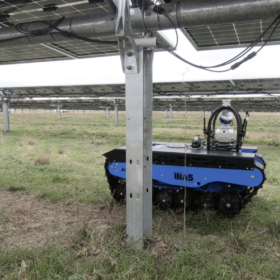
Australian science agency trials AI robots for solar farms
Australia’s national science agency says AI-driven robots could reshape solar maintenance across large-scale PV projects after successfully trialing the cutting-edge technology.
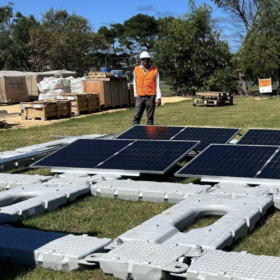
Enervest begins building Australia’s largest floating solar array
Melbourne-based renewables developer Enervest has begun construction of a 500 kW floating solar array on a water storage reservoir in Warrnambool, Victoria, which it says will be Australia’s largest floating solar installation on completion.
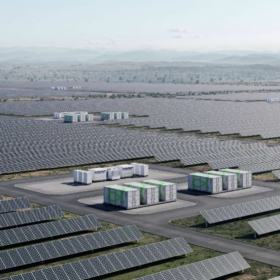
Edify Energy awards EPC contracts for 1.8 GW of solar and storage in Australia
Edify Energy will start construction proper of two massive solar and battery energy storage projects in Queensland, Australia, by mid-year after naming DT Infrastructure as its preferred engineering, procurement and construction (EPC) contractor.
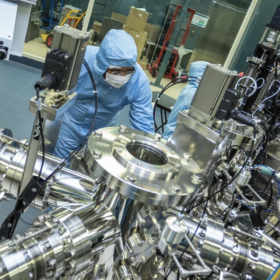
Scientists demonstrate quantum battery prototype with rapid charging
Scientists from Australia’s Commonwealth Scientific and Industrial Research Organisation (CSIRO), RMIT University and the University of Melbourne have developed a quantum battery prototype that demonstrates rapid, scalable energy storage using collective quantum effects.
