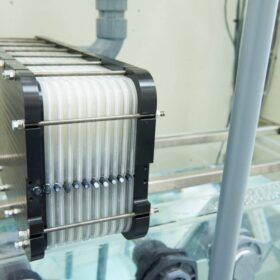
Redesigned zinc-air batteries ‘better’ than lithium, say Australian researchers
Researchers at Edith Cowan University in Australia have redesigned zinc-air batteries and have found the technology to be preferable to lithium-ion batteries – even for electric vehicles.
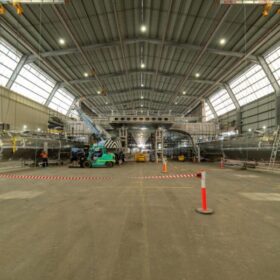
Australian shipbuilder to deliver world’s largest all-electric ferry
Australian’s Incat Tasmania is building the world’s largest all-electric ship at its shipyards in Hobart. The 130-metre-long vessel is to be fitted with a 40 MWh battery energy storage system that will power a series of electric propulsion system and waterjets.
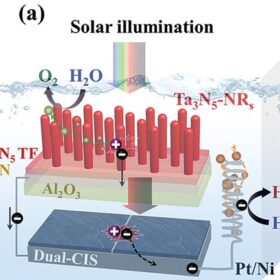
The Hydrogen Stream: Water splitting with solar-to-hydrogen efficiency of 12%
A Japanese team is working on a solar water splitting system with a 12% solar-to-hydrogen efficiency, while UK researchers have identified the reason why graphene’s dense crystalline structure is much more permeable to protons.
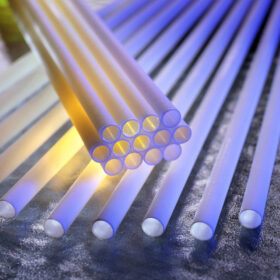
Australian startup aims to produce hydrogen with 30% less electricity
The Commonwealth Scientific and Industrial Research Organisation (CSIRO), Australia’s national science agency, has teamed up with RFC Ambrian to form a new company to commercialize electrolysis tech. CSIRO said the aim is to produce hydrogen with 30% less electricity than existing alkaline and polymer electrolyte membrane technologies.
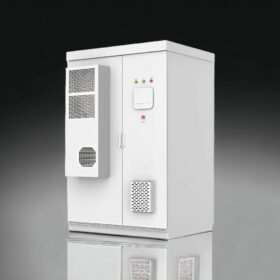
Chelion unveils scalable battery storage solution
Chelion Australia, an energy storage solutions specialist, has developed a new all-in-one lithium iron phosphate battery cabinet for commercial applications.
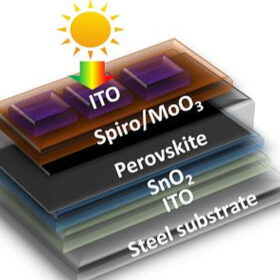
Perovskite solar cell built on steel substrate achieves record efficiency of 17.1%
Scientists in Australia claim to have achieved the highest efficiency ever reported to date for a perovskite solar cell built on a steel substrate. They utilized an indium tin oxide (ITO) interlayer between the steel substrate and the cell in order to avoid iron diffusion from the substrate into the PV device.
The Hydrogen Stream: New way to make drug materials from hydrogen
UW–Madison has developed an environmentally friendly approach for producing essential drug ingredients by opting for hydrogen, while India has presented new green hydrogen standards.
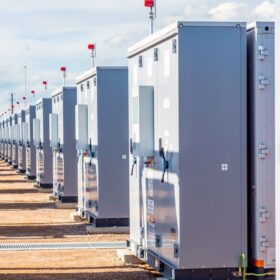
AGL goes live with second biggest battery in Australia
Australian energy giant AGL has officially opened its first operational grid-scale battery – the 250 MW/250 MWh facility at its Torrens Island power station site in South Australia.
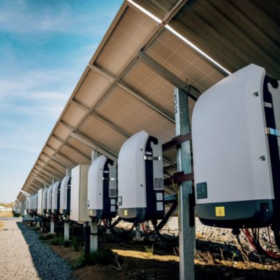
Cyberattack highlights energy grid security concerns
Sydney-based wholesale energy software supplier Energy One has suffered a data breach, mere days after an Australian government-funded research body warned of potential cyber risks for the nation’s energy grids due to foreign-made solar technologies.
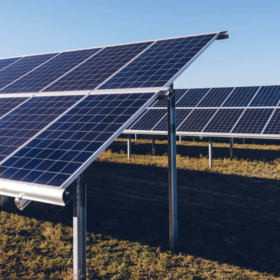
CEFC calls for more renewables following record investment
Clean Energy Finance Corp. (CEFC), the Australian government’s green bank, has invested a record AUD 1.2 billion ($770 million) in large-scale renewables projects over the past financial year, but it says that “a lot more” needs to be done to reach 82% renewables by 2030.
