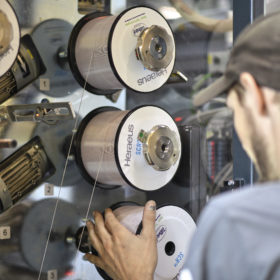
The weekend read: Coating puts busbars back in the game
In late September, Heraeus launched its Selectively Coated Ribbons (SCR) technology. The product will be rolled out in partnership with ribbon supplier Ulbrich. Delivering a 1.9 W power output boost without any equipment investment and with few process changes, Heraeus’ Toralf Eggert and Ulbrich’s Peter Berghofer claim SCR will make conventional busbars competitive with unwieldy multi-busbars.
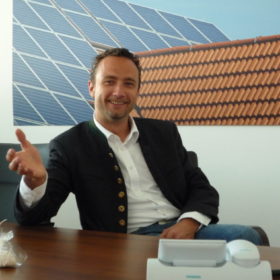
Austria: Energetica aims for gigawatt module production capacity by Q3 2019
In a bombshell announcement at the start of the week, the PV company said it would construct a gigawatt solar module fab in Austria. Now, Rene Battistutti, CEO at Energetica Group tells pv magazine why he believes the company’s modules are competitive with Asian products.
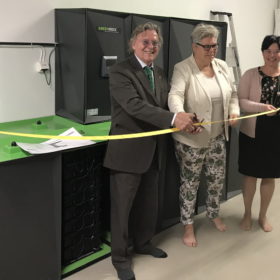
Swedish school installs saltwater battery, highlights environmental benefits
Saltwater batteries can be fully recycled receiving a “cradle to cradle” certificate, and don’t contain lead or lithium. For some, this prevails over the disadvantages of saltwater batteries being considerably bigger and heavier, as well as having a lower discharging current than lithium-ion batteries.
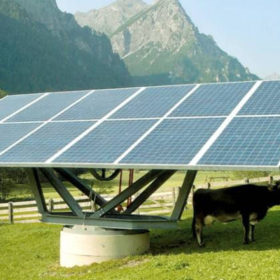
Energetica to establish gigawatt module fab in Austria
Production of high-efficiency solar PV modules in the Austrian region of Carinthia should commence as early as December 2018. Using a fully automated production line, Energetica Industries says it is well equipped for competition with Asian manufacturers.
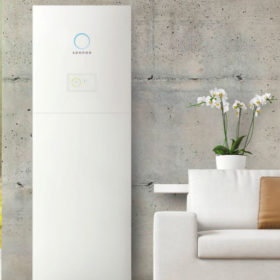
Sonnen hits almost €10 million in PV storage sales in June
The German PV home storage provider delivered around 1,500 solar batteries globally last month. At around 75%, most systems went to Germany, Austria and Switzerland.

The weekend read: Signs of life
European markets: Growth in solar installations returned to European shores in 2017, with some of the usual suspects posting big numbers, and several new players awakening to the possibilities of PV. Here, pv magazine provides an overview of the latest movements on the continent.
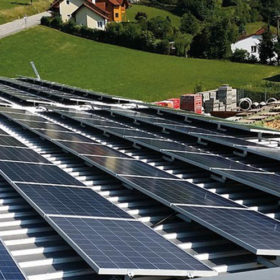
Austria plans to launch 100,000 solar roof program
The Austrian solar sector has welcomed the new draft plan for an integrated climate and energy strategy and, in particular, the planned “100,000 roofs program”. Greenpeace, however, believes a reorientation of climate policy is urgently needed and that the presented measures are inadequate to reach the Paris climate targets.
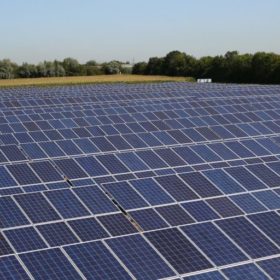
Austrian utility Wien Energie begins solar offensive
Austria’s largest power provider announced a plan to invest around €100 million in solar and €15 million in recharge stations for electric vehicles over the next five years. The company aims at investing mainly in residential and C&I projects.
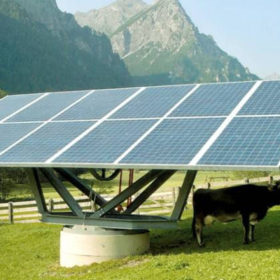
Austrian solar incentives portal overwhelmed with applications, again
Around 3,000 incentive applications were filed with the portal in the first five minutes after it was activated. The first-come-first-serve principle, however, will not be applied to determine which developers will have access to the incentive program.
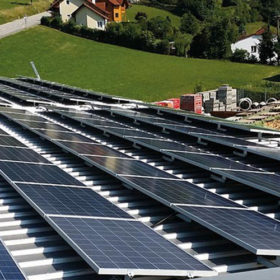
Austria sets 2018 FIT for PV systems up to 200 kW
Owners of residential solar PV systems in Austria will receive €0.0791 per kWh for power surplus in 2018.
