
China solar manufacturer Eging faces potential exit from flagship PV project
A regional government authority in eastern China is weighing whether to unwind a multibillion-yuan manufacturing joint venture with Eging PV after construction delays and funding disruptions, underscoring mounting strain across the country’s solar supply chain.
China wafer leaders lift quotes as 2026 module prices may hit CNY 1/W
China’s top wafer makers raised prices on key n-type formats, signaling potential module price rises toward CNY 1 ($0.14)/W in 2026 amid efforts to curb loss-making competition.
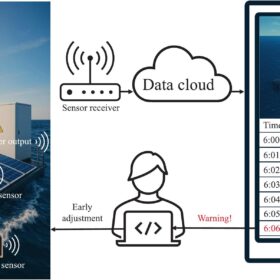
New digital twin for floating PV application uses artificial intelligence
Scientists have developed a floating PV digital twin system, trained on data from 155 physical experiments, using a two-tier artificial neural network (ANN) with a high-fidelity model and a reduced-order model. Predictive performance reached R2 values of 0.9996 for PV surface temperature and 0.9189 for power output.

China powers up world’s largest liquid air storage project
The 60 MW/600 MWh storage project is co-located with a 250 MW photovoltaic plant allowing for a high level of green energy self sufficiency.

China commissions world’s largest 1 GW open-sea offshore solar project
China has brought a 1 GW offshore solar power plant online off the coast of Dongying, Shandong province, combining PV with energy storage and aquaculture in what is now the world’s largest open-sea solar project in commercial operation.

CATL confirms significant upgrade to sodium-ion battery product range and scale into 2026
CATL announced it expects a new trend of “sodium and lithium batteries shining brightly together.”

Trina Solar posts new milestones for tandem efficiency, module power
Trina Solar says new certified results in perovskite-crystalline silicon tandem cells and modules demonstrate progress toward industrial-scale next-generation PV.

Trina Solar completes sale of 5 GW U.S. module plant to T1 Energy
Trina Solar has completed the sale of its 5 GW US solar module factory to T1 Energy, exiting direct manufacturing while retaining a minority equity stake.
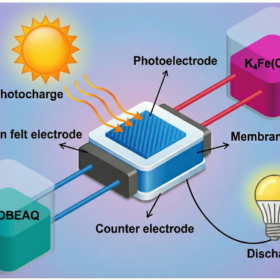
PV redox flow battery with 4.2% solar-to-electricity conversion efficiency
Scientists in China have constructed and tested a device that uses redox couples paired with a single triple-junction amorphous-silicon photoelectrode. When tested under a xenon lamp simulating one sun, the device achieved an average solar-to-electricity conversion efficiency of 4.2%.
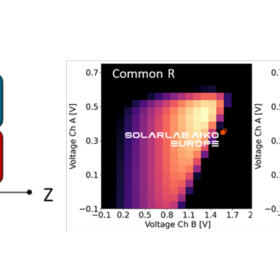
Aiko achieves 34.76% efficiency for 2-terminal perovskite-silicon tandem solar cell
The Chinese manufacturer said its 2-terminal 34.76%-efficient perovskite-silicon tandem lab-scale cell is based on heterojunction technology and developed by a collaboration of Solarlab Aiko Europe, Aiko headquarters, and its R&D in Yuwi, China.
