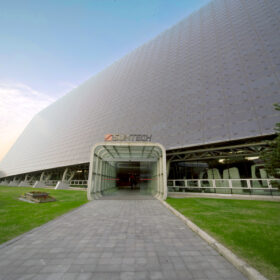
Hysolar moves to take control of Suntech
Hongyuan Green Energy (Hysolar) says it plans to take control of Wuxi Suntech Solar Power through a court-led restructuring that transfers core assets into a new entity while isolating legacy debt.
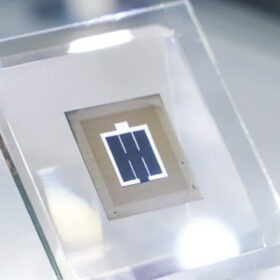
JinkoSolar achieves 32.76% efficiency in perovskite-TOPCon tandem solar cell
The result was certified by China’s National Photovoltaic Industry Metrology Test Center (NPVM). The cell utilizes a perovskite top device with MBT-ligand-controlled crystallization on a TOPCon silicon bottom cell, achieving a void-free, high-efficiency tandem structure.
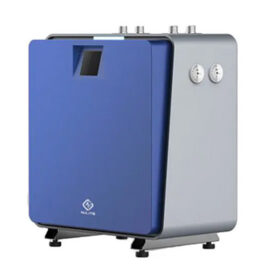
Nulite launches PV-driven residential heat pump
The Chinese manufacturer has unveiled a hybrid photovoltaic–geothermal heat pump system that uses solar electricity to directly power the unit, boosting efficiency and self-consumption. The 8–112 kW ground- and water-source system delivers heating, cooling, and domestic hot water with coefficients of performance often exceeding 4–5, while smart controls and the ground loop act as a thermal battery to optimize year-round performance.
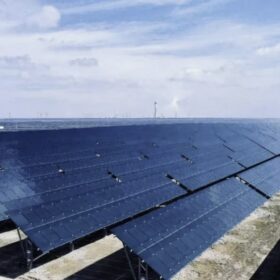
GCL Optoelectronics wins China’s first commercial perovskite-silicon tandem PV module order
GCL Optoelectronics has won a 1.2 MW commercial perovskite/silicon tandem solar module tender held by China’s Huaneng. The procurement required mass-producible, IEC-certified modules with over 25% efficiency, a 25-year performance warranty, and delivery by end of 2026.
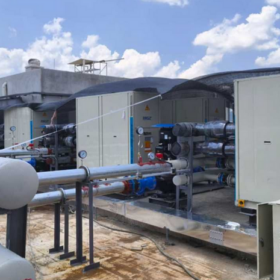
PVT-driven tower heat pump for building retrofits
Researchers in China demonstrated that integrating energy tower heat pumps with evaporator-side boilers, air-source heat pumps, or solar-assisted systems can significantly improve winter heating efficiency and economic performance in commercial buildings. Among the four configurations tested, the evaporator-side boiler and solar-assisted systems delivered the highest performance and energy savings, offering a sustainable, low-carbon alternative to conventional heating.
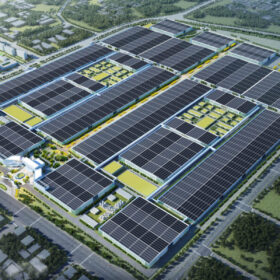
Chinese PV Industry Brief: JinkoSolar appoints new CEO
JinkoSolar has appointed Cao Haiyun as chief executive, while PowerChina has shortlisted 26 suppliers for a 31 GW solar module tender for 2026.
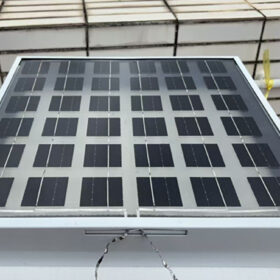
Thermochromic bifacial PV glazing system for reducing building cooling loads
Researchers in Hong Kong Hong Kong fabricated a thermochromic bifacial photovoltaic glazing system prototype that passively regulates solar heat gain while harvesting energy from both sides. Experiments and simulations showed it significantly reduces cooling loads and indoor temperatures while boosting electricity generation.

China’s new five-year plan deepens shift toward focus on renewables system
China’s 2026 to 2030 policy plan elevates clean electricity as a central driver of economic growth, with greater emphasis on system integration and industrial use.
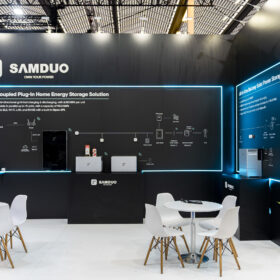
Samduo launches residential AC-coupled plug-in storage systems
The Chinese manufacturer said its new Nex E6000 and Nex E6000H storage systems combine a 6 kWh battery, an inverter, and an integrated energy management system, with scalable design allowing multiple units to be networked for higher capacity and coordinated energy sharing.

US says China not undercutting domestic battery anode makers
The US International Trade Commission (ITC) has blocked the imposition of anti-dumping and countervailing duties on Chinese active anode material (AAM), providing a massive sigh of relief for the domestic battery storage sector.
