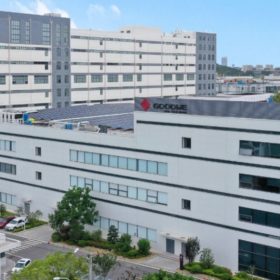
Chinese PV Industry Brief: GCL begins work on new polysilicon factory, GoodWe listed on Shanghai exchange
Polysilicon maker GCL-Poly has started construction of a factory with an annual production capacity of 54,000 MT as Chinese inverter manufacturer Goodwe launched an IPO on the Shanghai stock market.
New manufacturing technique for antimony sulfide-selenide PV cells
Chinese researchers have discovered a new hydrothermal method for the direct deposition of antimony sulfide-selenide films. They used ethylenediaminetetraacetic acid to regulate the reaction system, giving the film a flat, compact surface morphology. It has an efficiency of 10.5%, an open-circuit voltage of 664 mV, a short-circuit current of 23.8 mA cm−2, and a fill factor of 66.3%.
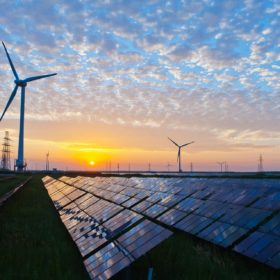
Chinese PV Industry Brief: 350 MW wind-solar project, 200 MW of floating PV
Longyuan has revealed plans to build a 350 MW hybrid wind-solar plant in Shandong province. China Resources, meanwhile, said it will build 200 MW of floating solar in Hubei province.

Giant agrivoltaic project in China
The Baofeng Group is building a 1 GW solar park which is hosting a goji berry plantation in the Binhe New District on the eastern banks of the Yellow River in the Ningxia Province. Around 640 MW have so far been grid-connected. Huawei is providing the inverters for the project.
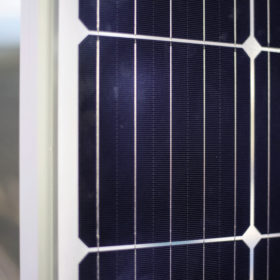
Inverted pyramid-based PERC solar cell with 21.4% efficiency
A Chinese research group has developed a PERC cell on a commercial 180-μm-thick monocrystalline silicon wafer with a standard size of 156 × 156 mm2. The cell has an open-circuit voltage (VOC) of 0.677 V, a short short-circuit current (ISC) of 9.63 A, and a fill factor of 80.30%.
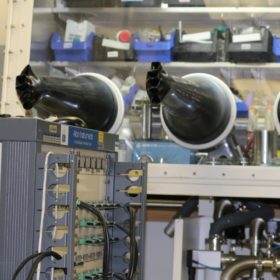
Solving a metal oxide mystery
An international group of scientists has discovered a ‘space charge’ mechanism that explains why certain metal oxides used as electrodes in lithium-ion batteries exhibit higher storage capacities than should be theoretically possible. The research, according to the group, will unlock new pathways to the development of more advanced energy storage systems.
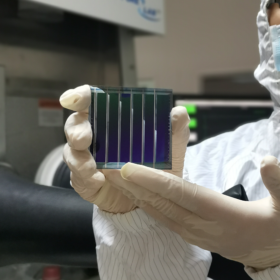
Organic solar module with 14.4% efficiency
Scientists in China have developed an organic module with an area of 18 cm2 based on a non-fullerene acceptor called DTY6. The device has a certified efficiency of 13.98%, but when a non-halogen solvent was used, it even reached 16.1%.
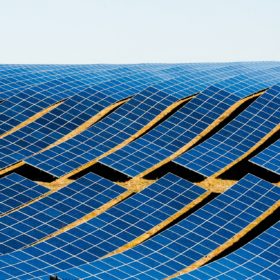
Chinese PV Industry Brief: New EVA encapsulant factory, 1 GW PV pipeline
Cybrid, a Shanghai-listed backsheet supplier, will open a new EVA encapsulant factory in Zhejiang province. Datang, meanwhile, has revealed plans to build 1.05 GW at 10 sites across three provinces.
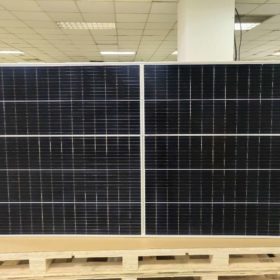
Light and shade of 500 W plus solar panels – part II
In the second article in a series, pv magazine editor Pilar Sánchez Molina and industry experts keep discussing the challenges and opportunities created by new panels with power output exceeding 500 W.

Light and shade of 500 W plus solar panels – part I
In the first article of a series, pv magazine editor Pilar Sánchez Molina analyzes with industry experts challenges and opportunities created by new panels with power output exceeding 500 W.
