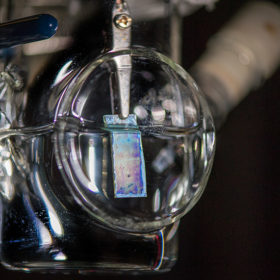
The Hydrogen Stream: Standardized measurements for solar water-splitting
NREL and Berkeley Lab have proposed efficiency and stability best practices for solar water-splitting to make hydrogen, while a team of researchers from Malaysia and Pakistan have revealed their findings on the feasibility of hydrogen-based incineration.
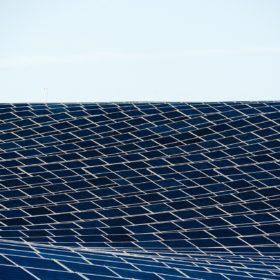
UK developer acquires Europe’s largest PV project
UK independent power producer Rezolv Energy has acquired the late-stage development rights to a 1,044 MW solar project in Arad county, Romania. The Eastern European country is preparing to roll out a contract-for-difference (CfD) scheme early next year to deploy 3.5 GW of solar and wind.

The Hydrogen Stream: Researchers identify light-triggered coupled oxygen evolution mechanism
Researchers in Singapore have developed a new light-triggered coupled oxygen evolution mechanism that builds on past oxygen evolution research. Oman, meanwhile, has announced a new hydrogen strategy.
Utility market 2022 and 2023: Sungrow’s highlights, hydrogen update
We’ll hear from Sungrow about its highlights from 2022, touching on flagship utility inverters, a new product coming to Europe to deliver further options for the utility ESS industry, updates on supply chains, and a look ahead to 2023.
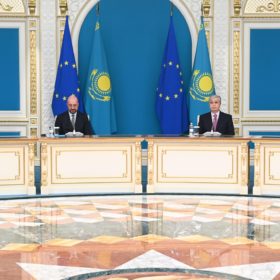
The Hydrogen Stream: Svevind to invest in 20 GW of electrolysis capacity in Kazakhstan
A unit of Svevind has signed an agreement to invest up to $50 billion in a project on the Caspian Sea that could produce up to 2 million tons of green hydrogen per year. Stellantis, meanwhile, has revealed plans to mass produce light commercial hydrogen vehicles.

Daikin to scale up heat pump output in Czechia
The Japan-based manufacturing company has revealed plans to increase fivefold its production of heat pumps at its facility in Czechia by 2025.
Poland to allocate 9 GW of solar in 2022-27 auctions
The Polish government plans to allocate around 13 GW of new renewables capacity under a six-year scheme. It said 4.5 GW of solar will be assigned to projects above 1 MW in size, while another 4.5 GW of capacity will be assigned to smaller installations.
Poland installed 3.3 GW of solar in January-August period
Poland hit 11 GW of installed PV capacity at the end of August. The distributed-generation PV segment continues to drive the growth of the Polish solar market, despite recent changes in legislation.
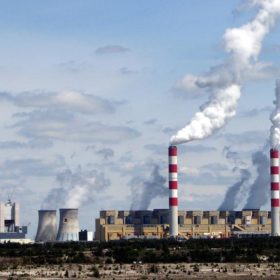
BNEF outlines scenarios to replace Europe’s largest coal plant with 10.7 GW of solar, wind
BloombergNEF (BNEF) has outlined a potential transition plan for a coal-fired power plant in Belchatow, Poland. It said that 5 GW of solar and 5.7 GW of wind could replace 80% of Belchatow’s lignite generation capacity by 2036, in an optimal scenario.
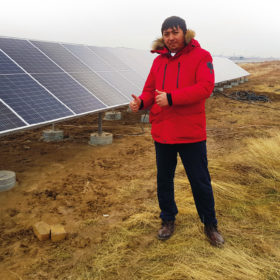
The weekend read: Central Asian solar on the rise
Utility-scale solar is stirring in the region, with support from development banks. Following a series of competitive auctions, PV projects have been commissioned and are under development in Uzbekistan and Kazakhstan. In the latter nation, corporate interest in distributed, small-scale renewables is growing but for further market uptake, additional incentives should be introduced, practitioners say.
