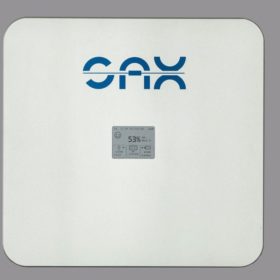
Germany will continue to dominate European home battery market – no matter who is in government
Industry association SolarPower Europe expects little change in the line-up of Europe’s biggest residential battery markets in four years’ time, with a rush of retrofits as turn-of-the-century solar feed-in tariffs begin to expire, set to keep Germany way ahead of the pack.
Romania allocates $63.7 million for solar rebates in 2022
The scheme provides rebates for installations larger than 3 kW in size provided that the grant does not exceed RON20,000 for conventional projects and RON25,000 for projects in isolated areas.
Kazakhstan’s solar auction concludes with lowest price of $0.0297/kWh
The Kazakh authorities allocated 20 MW of PV capacity in the procurement exercise and said another 20 MW solar auction will be held next year.

Solitek unveils 12.6%-efficient solar panel for greenhouses
The frameless solar panel has a light transmittance of 40% and nominal power of 235 W. The manufacturer offers a 30-year performance guarantee.
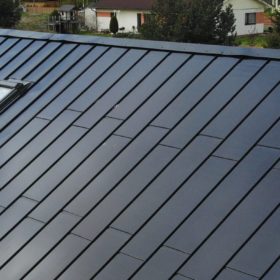
BIPV modules from Estonia
Estonian start-up Roofit.solar recently raised €6.4 million from a group of investors led by Germany’s Baywa r.e. The company will use the funds to commercialize its three BIPV modules with power outputs of 110 to 160 W. All products rely on a 0.5 mm metal back sheet with highly durable pural coating.
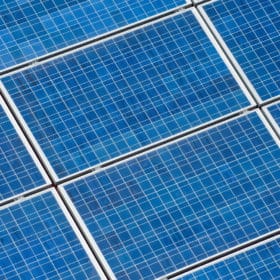
Poland hits 6 GW milestone
The eastern European country deployed more than 2 GW of new PV capacity in the first nine months of 2021.

New renewables developer wants 2.7 GW of European projects on the books next year
Aukera Energy, launched as a brand today but staffed by clean energy professionals who have worked with backer AtlasInvest for at least a decade, says it already has more than 1 GW of solar and wind capacity under development in Italy, Poland and the U.K. and wants to almost treble the scale of that portfolio within 12 months.
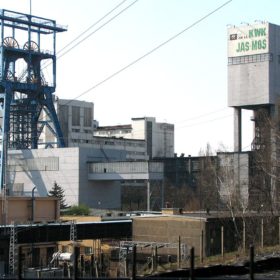
Poland’s largest PV plant comes online
Built by Polish energy producer ZE PAK, the 70 MW solar plant will sell solar power to Polish telecommunications group Polsat under a 15-year power purchase agreement.
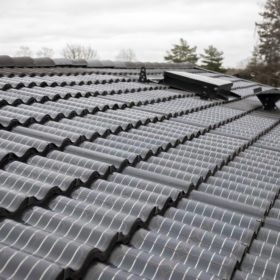
Rusnano tests made-in-Russia CIGS solar tiles
The 15%-efficient solar tile is manufactured by Russian producer Solartek with CIGS equipment provided by Sweden’s Midsummer.
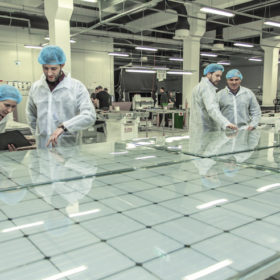
Lithuanian module maker says European and US clients moving away from Chinese supply chain
Vilnius-headquartered Solitek is preparing to ramp its output next year on the back of rising orders in Scandinavia, and says its new partnership with New York-based Convalt Energy will reduce its dependence on Asian semiconductors and solar cells.
