
Plans for HJT gigafactory in Russia
The controlling shareholder of Russian PV manufacturer Hevel Solar says it has started construction on a gigafactory to manufacture solar ingots, wafers and heterojunction (HJT) cells in the Kaliningrad exclave of Russia, between Lithuania and Poland.
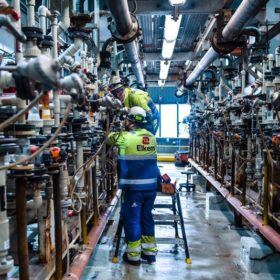
Europe had just 650 MW of solar cell manufacturing capacity at the end of 2020
The latest update to the Photovoltaics Report produced by research organization the Fraunhofer ISE has offered up the usual slew of interesting stats on the state of solar across the continent.

Maxeon secures EU cash to make its ‘stick-on’ solar panels in France
The TotalEnergies-controlled solar manufacturer will secure an, as yet undetermined chunk of a new €118.6 million low-carbon innovation fund to start producing its frameless, glass-free solar roofing products at Porcelette, in northeastern France.

The Hydrogen Stream: Air Liquide eyes South Korea as Cummins announces fuel-cell truck plans
With Australia prepping plans for vast green hydrogen and ammonia production facilities, two of the country’s state governments are trying to drum up the end-user market as agreements are signed to drive use of the gas in Ukraine and Poland.

‘Polysilicon shortage will continue through 2021’
The latest global PV industry outlook published by trade group SolarPower Europe, has indicated tight supply of the solar panel raw material is expected to persist this year but the trade body said it would be unlikely to drive further price rises.
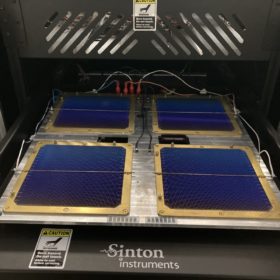
New tech may bring heterojunction solar cells based on p-type wafers closer to mass production
An Australian-Russian research group has developed a silicon heterojunction solar cell based on p-type gallium-doped wafers with an efficiency of 22.6% and an improved stability. The scientists are convinced that these wafers may become a mainstream solution for the SHJ segment within the next decade.

Montenegro launches net metering program for rooftop PV
Although very limited in scale, the program is Montenegro’s first attempt to support rooftop PV.
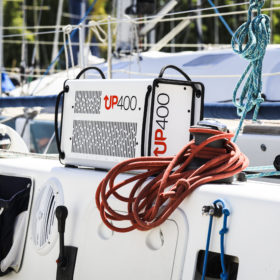
Portable hydrogen fuel cell generator with power output of 400 W
The generator can be combined with batteries, solar panels, or small wind turbines. It is based on a proton exchange membrane fuel cell technology and is claimed to have a minimum lifetime of 5,000 working hours.
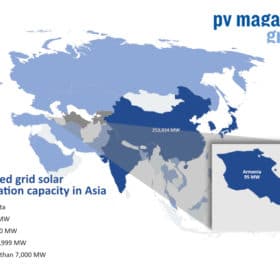
Masdar secures deal to develop ‘Armenia’s biggest utility scale solar project’
The UAE-based, state-owned renewables company had its original suggestion of a $0.0299/kWh price for the solar power generated refused by Yerevan, with the government putting the project out to a competitive tender. Masdar has won the bidding, but at a reduced energy tariff.
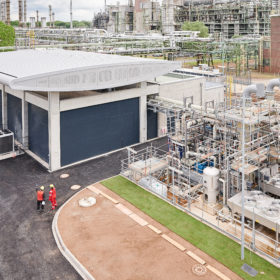
The Hydrogen Stream: Ineos to invest £25m in HydrogenOne fund as Shell fires up its 10 MW electrolyzer
Plus, the Norwegian government is set to devote €2.5 million into a joint venture trying to develop liquid organic hydrogen carrier solutions for shipping by the middle of the decade.
