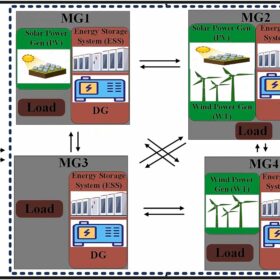
Energy trade model for interconnected renewable microgrids
Scientists from China proposed a new method for energy trade optimization between interconnected microgrids and the main utility grid. The novel approach utilizes particle swarm optimization and gravitational search algorithms with Nash Bargaining.
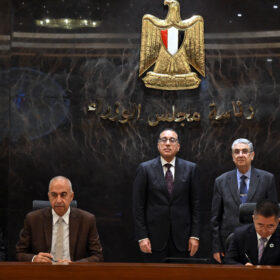
Chinese company to develop 10 GW of solar in Egypt
A new agreement signed between the Chinese group and Egyptian government officials is part of the country’s Green Corridor Initiative that aims to increase the use of renewable energy. The solar project is expected to save more than $1 billion in annual natural gas costs.
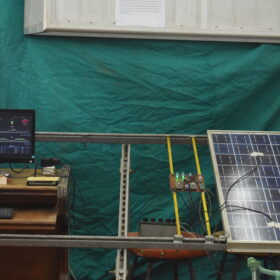
Scientists unveil low-cost, wireless monitoring system for PV systems
Researchers from Egypt have utilized NodeMCU WiFi modules and a single-board Raspberry Pi to monitor and control PV modules. Their tests showed a “good degree of agreement” between the system and multimeter readings.

Empirical approach shows PV is getting cheaper than all the forecasters expect
With the consistently unambitious forecasts for solar trotted out by entities such as the International Energy Agency (IEA) now a matter of record, a German risk management company has tried to predict more realistic figures for 2030 and beyond.
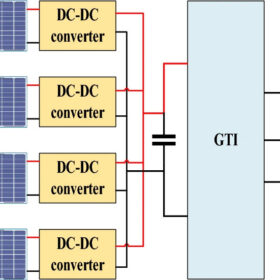
New MPPT approach for multi-string PV systems under partial shading
Egyptian researchers have developed a multi-string PV system with a converter control strategy, achieving 99.81% efficiency with a direct duty cycle for maximum power point tracking (MPPT).
Novel tool for PV system sizing allows users to assess tradeoffs between reliability and costs
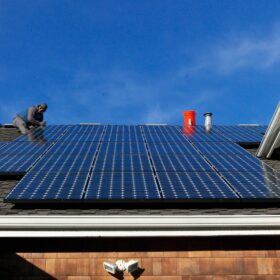
Developed by scientists in Egypt, trhe Green Energy Solutions software allows users to assess the tradeoffs between the PV system reliability and its costs. Compared to PVsyst, it has an error margin of up to 9%.

New bio-inspired based algorithm to improve PV output under partial shading
The novel algorithm is based on the behavior of marine animal tunicates and reportedly provides remarkable results in terms of power errors. It was tested in four PV system configurations with five different shade patterns.
Underground photovoltaic water pumping system with average system efficiency of up to 8.5%
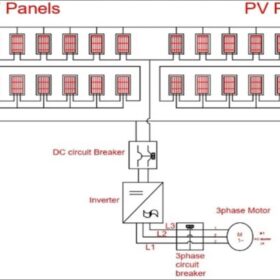
Developed by Egyptian scientists, the PV-powered water pumping system may produce up to 181.8 m3 of water per day. The system consists of two PV arrays with each a capacity of 4.6 kW and a pumping unit made up of a 7.5 kW three-phase alternating current motor, a multistage submersible pump, a deep well, and a 15 kW inverter.

The Hydrogen Stream: North African hydrogen development stokes concerns
French researchers have identified a number of potential social issues that may arise as North Africa develops its significant hydrogen potential, while the European Commission has released the details of its pilot auction for European renewable hydrogen production.

ACWA Power reaches financial close for 200 MW solar project in Egypt
With an overall investment cost of US$182 million, the Kom Ombo plant is expected to be commercially operational in January 2024.
