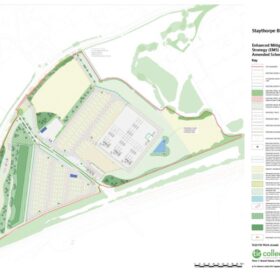
Elements Green secures approval for 360 MW/720 MWh storage project in UK
UK-based solar and energy storage developer Elements Green has secured planning consent for its Staythorpe Battery Energy Storage System (BESS) project in the UK. The system will be colocated with a massive 800 MW solar farm.

Home energy management systems: Compatibility, good forecasts and efficiency
The quality of home energy management systems is a concern for the industry. More than 300 participants at the pv magazine Focus Event in the conference center of the Munich Trade Fair Center made this clear. To provide a glimpse into the “black box,” manufacturers, scientists and users discussed the most important criteria.
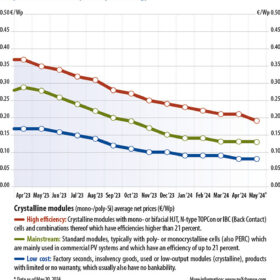
Low prices for TOPCon solar panels put pressure on PERC
In May 2024, high-efficiency panels, predominantly glass-glass modules equipped with tunnel oxide passivated contact (TOPCon) cells began to converge on price with mainstream offerings, writes Martin Schachinger, of pvXchange. Production volumes for these negatively-doped, “n-type” cells and modules have been ramped up in China while the increasingly restrictive customs situation in the United States may already be having an impact. For the European market, ever-lower prices for the latest module technology would suggest that demand would continue to rise were it not for a number of disruptive factors.
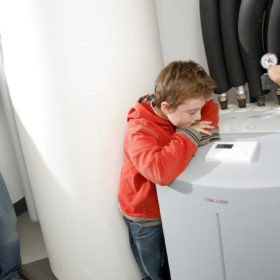
Heat pump plus PV usually cheaper than gas heating after 11 to 14 years
An analysis by Eon and Aachen University shows how quickly heat pumps with and without photovoltaic systems and storage pay for themselves in different types of homes, also in comparison to gas heating. A heat pump with photovoltaics is usually more economical than without. Balcony solar usually pays for itself in three to six years. An accompanying survey shows that most people underestimate the economic viability of climate-friendly energy technologies.
Italy allocates 145.5 MW of PV in latest renewables auction
The Italian authorities have allocated 243.3 MW of renewables capacity in the nation’s 14th procurement exercise for clean energy. Developers have offered a maximum discount ranging between 2% and 5.5% from the auction ceiling price of €0.07746 ($0.083)/kWh.
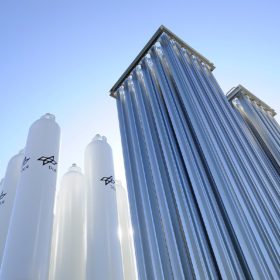
Fraunhofer IAO, DHBW Heilbronn examine decentralized hydrogen storage
Researchers have analyzed various storage options for green hydrogen, such as in neighborhoods, at company locations and on campus grounds. Their study provides an overview of the respective advantages and disadvantages of physical, chemical and pure hydrogen storage.

Ireland deployed 505 MW of PV in 2023
Ireland’s solar capacity has almost doubled in the space of one year, largely driven by utility-scale projects of 5 MW or more. In 2023, the country had 349 MW of utility-scale solar across seven projects, but this has since increased to 594 MW across 13 installations.

ChatGPT can tell scientists how to build better perovksite solar cells, research says
An international research group has sought to build for the first time a perovskite solar cell with the help of ChatGPT. The experiment helped the scientists identify a series of materials for the cell composition and the results were cells with a higher power conversion efficiency compared to that of reference cells built without the material proposed by the large language model.
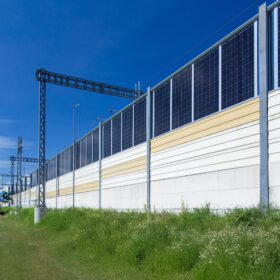
Lithuania testing bifacial PV in noise barriers
Two pilot projects are integrating PV into noise barriers, one alongside a railway near Vilnius, and the other along the national E5 highway connecting the cities of Kaunas and Vilnius.

Masdar buys out Greece’s Terna Energy in €3.2 billion deal
Masdar has agreed to acquire initially 67% of Greece’s Terna Energy, a developer of clean energy infrastructure, in a €3.2 billion ($3.4 billion) deal.
